
How Much Do Real Pearls Cost? A Freshwater Pearl Price Guide
Real pearls do not have one price — they range from under $50 for quality freshwater pearl earrings to tens of thousands for a South Sea strand. The type of pearl matters far more than whether it is "real." Freshwater pearls, the most accessible genuine pearl, typically cost $30–$300 in finished sterling silver jewelry, which is why they are the smartest starting point for most buyers. Here is what actually drives pearl prices, realistic ranges by jewelry type, and how to tell whether a price is fair.
What determines the price of real pearls
Five factors set the price of any genuine pearl: pearl type, luster, surface quality, shape, and size — plus the metal it is set in.
Pearl type
Freshwater pearls are cultivated in mussels that can grow many pearls at once, so supply is larger and prices are lower. Saltwater pearls — akoya, Tahitian, and South Sea — come from oysters that usually produce one pearl at a time, which is the main reason a saltwater strand can cost ten times more than a freshwater one of similar beauty. If you want to compare the categories in depth, see our guide to the different types of pearls.
Luster and surface quality
Luster — how sharply light reflects off the pearl's surface — is the single biggest quality factor within a pearl type. A smaller pearl with mirror-like luster is generally worth more than a larger, chalky one. Minor surface marks are natural and normal; heavy pitting lowers the price.
Shape and size
Perfectly round pearls are the rarest and most expensive. Near-round, oval, button, and baroque shapes cost noticeably less while looking just as beautiful in the right design — many modern pieces are designed around baroque shapes on purpose. Size raises price quickly: each extra millimeter of a round pearl adds disproportionately to cost.
The metal and setting
The same pearl can sit in very different jewelry. Solid gold settings raise the price sharply; 925 sterling silver — plain or with 18k gold plating — keeps a piece affordable without resorting to brass or mystery alloys. If a listing will not tell you what the metal is, that silence is part of the price.
Freshwater pearl price ranges by jewelry type
As a rule of thumb, well-made freshwater pearl jewelry in sterling silver falls in these ranges:
Earrings: quality freshwater pearl studs and drops typically run $30–$150. Studs sit at the lower end; designs with multiple pearls or lab-grown gemstone accents sit higher. Browse our pearl earrings to see what these ranges look like in practice.
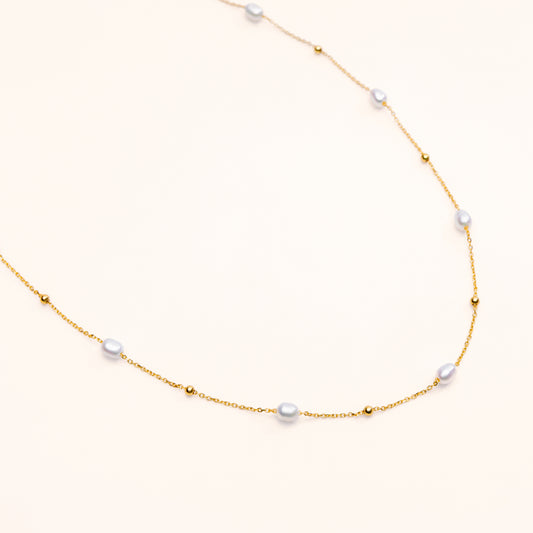
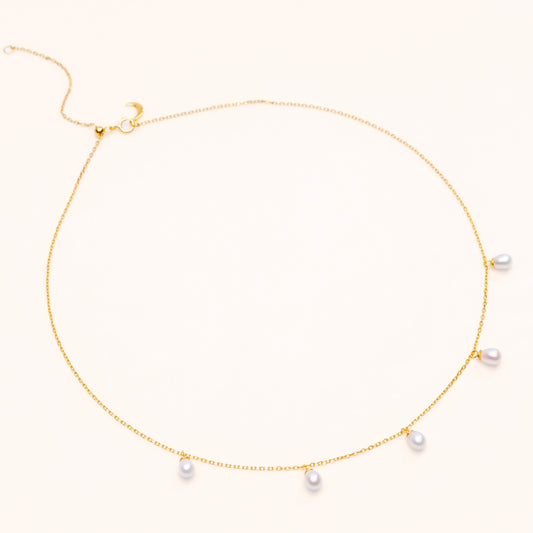
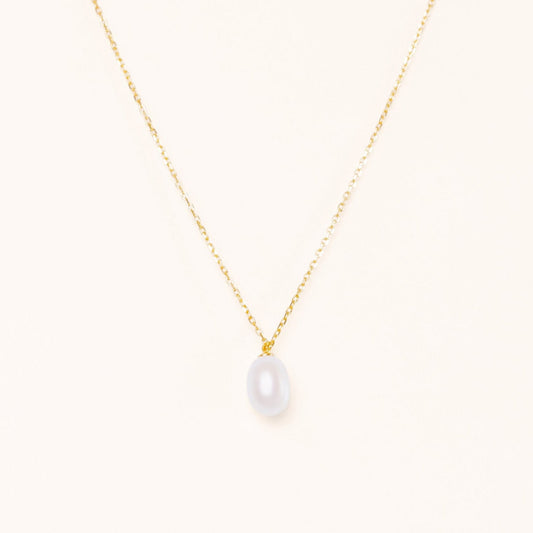
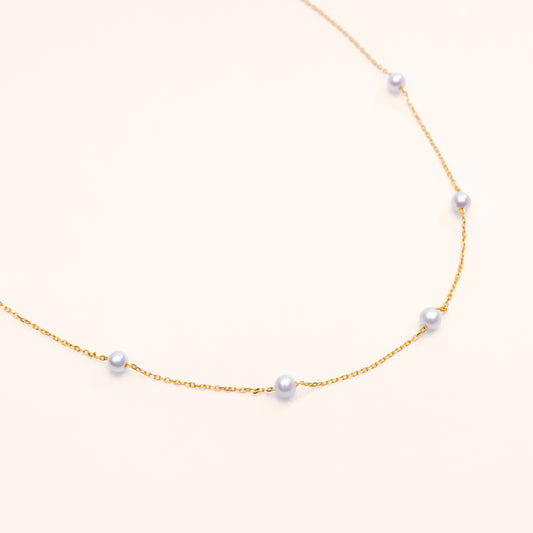
Necklaces: a single-pearl pendant on a sterling chain usually costs $50–$150, while a full freshwater strand commonly runs $100–$400 depending on pearl size, roundness, and luster. Beaded and station styles — pearls spaced along a chain — sit in between. See our pearl necklaces for examples.

Bracelets: freshwater pearl bracelets generally cost $30–$120. Because bracelets use fewer or smaller pearls than a necklace, they are one of the most affordable ways to own real pearls.
For comparison, akoya strands often start around $300–$500 and climb well past $1,500, while Tahitian and South Sea pieces regularly reach several thousand dollars. Those prices reflect rarity, not a difference in being "real."
Why freshwater pearls cost less — and why that is not a downside
Freshwater pearls cost less because they are more abundant, not because they are lesser pearls. They are grown in the same slow, natural nacre-building process as saltwater pearls, and top-grade freshwater pearls today can rival akoya luster. At Pearl Luna, we draw on 70 years of working with pearls in Kobe, Japan, and set real freshwater pearls in 925 sterling silver with 18k gold plating — never brass — which is how much of our freshwater pearl collection stays under $100 without cutting corners on materials.
How to know you are paying a fair price
A fair pearl price comes with full disclosure: the seller should state the pearl type (freshwater, akoya, etc.), the metal (925 sterling silver, solid gold, or plating over silver), and whether the piece is hypoallergenic and nickel-free. Be cautious of "pearl" jewelry that never says what the pearls or metal actually are — glass and plastic imitations are common at suspiciously low prices. Our guide to telling real pearls from fake ones covers the quick tests. Finally, look for a real returns policy; a 30-day return window costs a seller nothing if the quality is genuine. If you are shopping on a budget, start with our jewelry under $100 — every piece uses real freshwater pearls or lab-grown gemstones in sterling silver.
Frequently asked questions
Are freshwater pearls real pearls?
Yes. Freshwater pearls are genuine pearls grown inside living mussels through the same nacre-building process as saltwater pearls. They are cultured — meaning the process is started by a pearl farmer — but the pearl itself is entirely real, formed layer by layer over months or years.
How much should a freshwater pearl necklace cost?
A quality freshwater pearl pendant necklace in sterling silver typically costs $50–$150, while a full strand usually runs $100–$400 depending on pearl size, shape, and luster. Prices far below that range usually signal imitation pearls or undisclosed base metals like brass.
Why are freshwater pearls cheaper than akoya pearls?
Supply, not quality. A freshwater mussel can grow many pearls at once, while an akoya oyster typically produces one. That abundance makes freshwater pearls far more affordable, even though top-grade freshwater pearls can approach akoya-level luster at a fraction of the price.
Do real pearls hold their value?
Pearls are best bought to wear, not as an investment. Fine saltwater strands can hold value, but everyday pearl jewelry's real value is in years of wear. With simple care — wipe after wearing, store separately — freshwater pearl jewelry keeps its luster for decades.
Is $50 too cheap for real pearls?
No. Real freshwater pearl earrings and bracelets are widely available for under $50 from reputable sellers. What matters is disclosure: the seller should clearly state freshwater pearls and a quality metal like 925 sterling silver. Unlabeled materials, not low prices alone, are the warning sign.