
Jewelry Gift Etiquette: What's Appropriate for a Coworker, Friend, Partner, or Parent
Jewelry is an appropriate gift for almost anyone. The question is never whether to give it — it is which piece. And the thing that decides that is not price. It is how close to the body a piece sits, how permanent it feels, and how much it appears to stake a claim. A pair of pearl studs is a warm, easy gesture from a colleague. A ring from the same colleague is not. Once you can see that scale, the whole category gets simple to shop.
The rule behind all jewelry gift etiquette
Intimacy in a jewelry gift rises with visibility, permanence, and implication — not with cost. Earrings and bracelets read as accessories: worn on the edges of the body, easy to take off, easy to receive. Necklaces sit closer to the heart and read as personal, though rarely as a declaration. Rings carry meaning nobody can unsee, especially on the left hand. And engraving moves any piece one full step up that scale, because it makes the gift impossible to wear neutrally.
Apply that ladder to the relationship and the answer usually appears on its own.

Gifting jewelry to a coworker or manager
Jewelry is fine for a coworker as long as it stays on the accessory end of the scale: small earrings, a simple bracelet, or a delicate pendant, modestly priced and not engraved. What makes a workplace gift awkward is not the category but the signal — anything that suggests you have been studying someone's taste, or spending unusual money on them, changes the register of the relationship.
A few practical guardrails. Honor any Secret Santa or office price cap exactly; going over it is its own kind of statement. Skip rings entirely. Gifting upward to a manager is best kept token-sized or done as a group, so it cannot read as currying favor. And if you are buying for several people at once, matching pieces at a shared price point — a set of pearl earrings, say — solves the awkwardness of anyone comparing gifts. Our jewelry under $100 range is built for exactly this kind of buying.
Gifting jewelry to a friend
Friends are the easiest people to buy jewelry for, because you already know what they actually wear. Spend your attention on matching their metal rather than guessing at a new style — someone who wears warm gold every day will not suddenly convert to silver because you bought it. Look at their earlobes and wrists before you shop, not at the trend cycle.
Safe, genuinely wearable choices: pearl studs, a single-pearl pendant, or a fine bracelet they can stack with what they own. For a milestone birthday, a birthstone or anniversary stone gives the piece a reason to exist without making it heavy-handed. Our guide to anniversary gemstones by year is a useful shortcut if you want the stone to mean something.
Gifting jewelry to a partner
In a romantic relationship, the ring is the only piece that carries a fixed meaning — everything else is flexible. Give a ring to a partner and it will be read as a proposal signal unless you head that off explicitly, which rather spoils the moment. In the first several months, stay with earrings or a bracelet: warm, personal, and free of subtext.
Once a relationship is established, necklaces become the natural territory. A pendant sits at the centre of everything she wears and gets used far more than a statement piece will. A coloured stone — lab-grown ruby, sapphire, or emerald — adds specificity if you want the piece tied to a date or a birth month. If you are unsure of her style, our guide on how to buy jewelry as a gift covers reading someone's existing collection.
Gifting jewelry to a parent, in-law, or grandparent
For an older recipient, comfort and ease of fastening matter more than style trends. Fine spring-ring clasps are genuinely difficult for stiff or arthritic hands, so choose a larger lobster clasp or a piece that goes on over the head. Heavy drop earrings pull on lobes that have been pierced for decades; lighter studs and short drops wear far better.
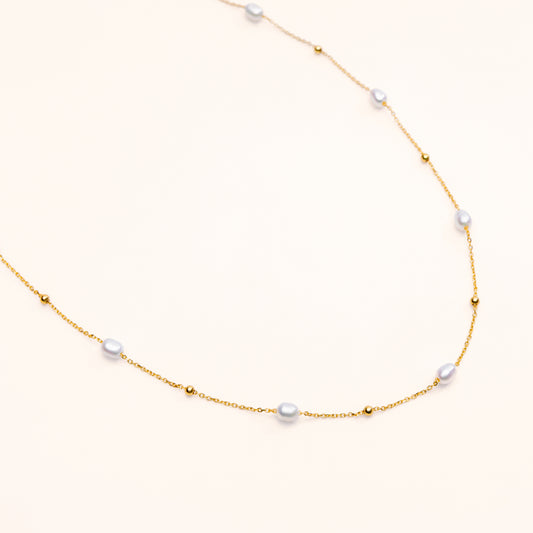
Beyond that, pearls remain the most reliably welcome gift in this group — classic without being staid, and flattering against every skin tone as it changes. A strand or station necklace is close to universally safe. For an in-law you do not know well, keep it modest and unengraved; the gift should feel generous, not like a bid for closeness that has not been earned yet.
Gifting jewelry to a teenager or child
Keep it small, hypoallergenic, and replaceable. Young ears are more prone to reacting to cheap metal, so the material matters more than the design: real 925 sterling silver or properly plated silver rather than brass, and nickel-free throughout. Everything we make is 925 sterling silver with 18k gold plating, hypoallergenic and nickel-free, which is why it suits first-jewelry gifting.
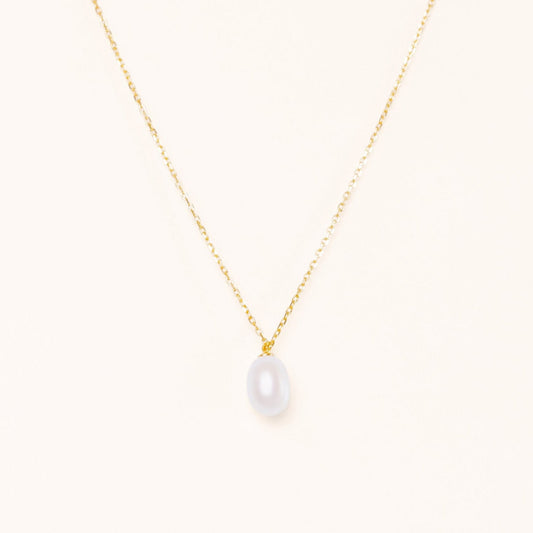
A single pearl pendant or a pair of small pearl studs makes a lovely first grown-up piece, and costs little enough that a lost earring is not a catastrophe.
How much to spend on a jewelry gift
There is no rule here, only a workable range that keeps a gift from reading as either dismissive or excessive. As a rough guide: a coworker or Secret Santa gift sits comfortably around $20–40; a friend, $30–80; a close friend or sibling, $50–120; a parent or grandparent, $50–150. For a partner, the number matters far less than whether the piece gets worn.
A useful test: if the price would make the recipient feel they owe you something, it is too high for that relationship. Much of our range sits under $100 deliberately, because a gift that gets worn every week is worth more than one kept in a box.
Two details that matter more than the piece itself
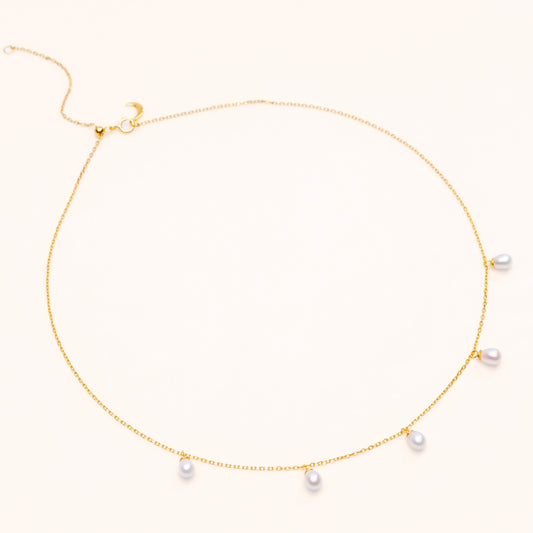
First, choose something you do not need a size for. Earrings suit everyone, and an adjustable or extender chain removes the guesswork from a necklace. Rings and fitted bracelets are the only real sizing risk — our bracelet size guide will help if you are set on one.
Second, buy where returns are simple. We offer free shipping and 30-day returns, which means a gift that misses can be quietly exchanged without anyone having an uncomfortable conversation about it. Our gifts collection is the fastest place to start if you would rather browse by occasion.
Frequently asked questions
Is it inappropriate to give jewelry to a coworker?
No, as long as the piece is modest and impersonal. Small earrings, a simple bracelet, or a delicate pendant at a gift-appropriate price are all fine. Avoid rings, engraving, and anything expensive enough to suggest a closer relationship than you have. If your office sets a price cap, stay within it.
Does giving a ring always mean a proposal?
Not always, but in a romantic relationship it will be read that way unless you make the intent clear first. Rings given by friends, parents, or for a milestone birthday carry no such implication. If you want to avoid ambiguity entirely, a pendant or bracelet delivers the same sentiment without the question mark.
How much should you spend on jewelry as a gift?
Match the amount to the relationship rather than to the piece. Around $20–40 works for a coworker, $30–80 for a friend, and $50–150 for a parent or close family member. The best test is whether the price would leave the recipient feeling indebted. If so, spend less and choose better.
Are pearls an old-fashioned gift?
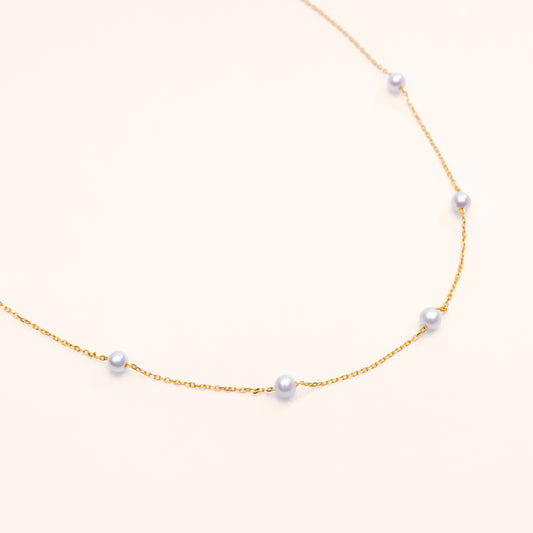
Not in modern settings. Contemporary pearl jewelry uses single pearls, station chains, and mixed metals rather than the uniform strand associated with past generations. A pearl pendant or a pair of studs reads as quiet and current, and suits recipients across a wide age range, which makes pearls unusually safe for gifting.
Can you give jewelry without knowing someone's size?
Yes — choose earrings or an adjustable necklace. Earrings fit everyone, and most necklaces come with an extender chain that covers several inches of length. Rings and fitted bracelets are the only pieces where size genuinely matters, so leave those for recipients whose measurements you already know.
A note on how we make things
Pearl Luna grew out of seventy years of working with pearls in Kobe, Japan. Every piece is 925 sterling silver with 18k gold plating, set with real freshwater pearls and lab-grown ruby, sapphire, emerald, and diamond — never brass. It is hypoallergenic and nickel-free, which matters more in a gift than it does in something you chose for yourself, because you cannot ask the recipient about their skin first.