
Gold or Silver Jewelry: How to Choose the Right Metal for Your Skin Tone
Share
The short answer: warm skin undertones usually look best in gold jewelry, cool undertones in silver, and neutral undertones can wear both. Your undertone — the subtle hue beneath your skin's surface — stays the same year-round, even when your skin tans or lightens, which is why it's a more reliable guide than skin color itself. Below are three quick at-home tests to find yours, and what to do if the answer isn't obvious.
The quick answer: match the metal to your undertone
Gold flatters warm undertones because its yellow hue echoes the golden, peachy tones already in the skin. Silver flatters cool undertones because its bright white shine complements pink and bluish tones. If you're neutral — a mix of both — you're the lucky one: nearly any metal will sit well against your skin, so you can choose by outfit or mood instead.
How to find your skin's undertone: 3 simple tests
1. The vein test
Look at the veins on the inside of your wrist in natural daylight. If they appear greenish, you likely have a warm undertone. If they look blue or purple, you're likely cool. If you see a mix of both, or can't decide, you're probably neutral.
2. The white paper test
Hold a plain sheet of white paper next to your bare face in daylight. Skin that looks yellowish or golden against the paper suggests a warm undertone; skin that looks pink, red, or slightly bluish suggests cool. If your skin simply looks grayish or matches neither, that points to neutral.
3. The sun test
Think about how your skin reacts to sun. Skin that tans easily and rarely burns tends to be warm-toned. Skin that burns quickly and tans little tends to be cool-toned. This test is less precise than the first two, so use it to confirm rather than decide.
What to wear if you're neutral (or still not sure)
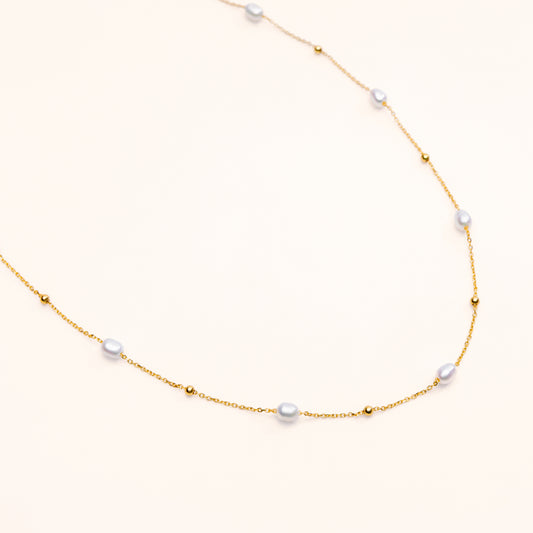
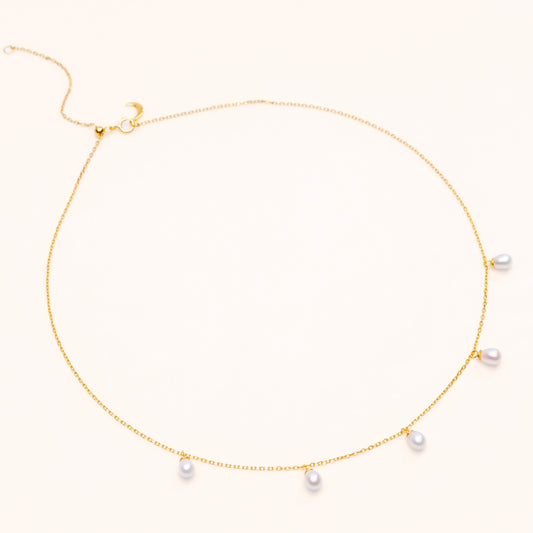
If your tests point in different directions, choose pieces that combine both metals or sit close to the skin in a soft, light-reflecting material. Two-tone jewelry — sterling silver with 18k gold-plated details — reads as intentional rather than mismatched, and it lets one piece work with everything else you own. Browse our necklaces and earrings and you'll notice many pieces pair polished silver with warm gold accents for exactly this reason.
Why pearls flatter every skin tone
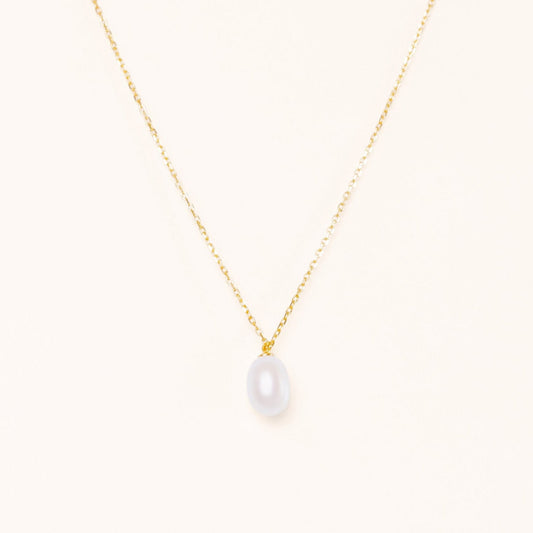
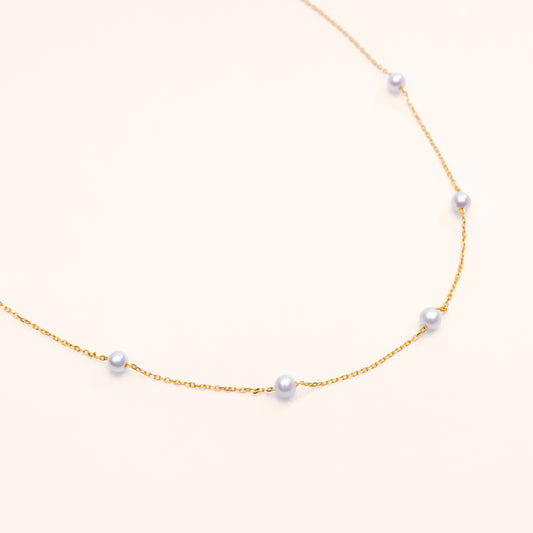
Pearls are the rare jewelry material that suits warm, cool, and neutral undertones alike. A freshwater pearl isn't flat white — its surface carries a soft iridescence (called orient) that shifts between warm cream and cool rose depending on the light and the skin it sits against. In effect, the pearl adapts to you. That's why a simple strand or pair of studs from our freshwater pearl collection is the safest gift when you don't know someone's metal preference — and why pearls have anchored jewelry boxes for generations.
Can you mix gold and silver jewelry?
Yes — mixing metals is not just acceptable, it's one of the most current ways to wear jewelry. Three tips make it look deliberate: repeat each metal at least twice across your look so nothing reads as an accident; use a two-tone piece as a bridge between your gold and silver items; and keep proportions consistent, pairing dainty with dainty. A pearl piece also works beautifully as a neutral anchor between the two.
A note on quality (whichever metal you choose)
The metal only flatters if it stays bright. Every Pearl Luna piece is made from 925 sterling silver — never brass — and our gold pieces use 18k gold plating over that same sterling base, so both finishes are hypoallergenic and nickel-free. If your ears are reactive, our guide to earrings for sensitive ears explains why the base metal matters more than the color. And if you're weighing plated gold against solid, we've broken down whether gold-plated jewelry is worth it. After 70 years working with pearls in Kobe, Japan, our view is simple: choose honest materials, and either metal will serve you for years. Most of our range — see jewelry under $100 — ships free with 30-day returns, so you can test both metals against your skin at home.
Frequently asked questions
Should I wear gold or silver jewelry?
Match the metal to your skin's undertone: warm undertones (greenish wrist veins, golden cast) generally look best in gold, while cool undertones (blue or purple veins, pink cast) suit silver. Neutral undertones can wear both. Personal preference still wins — these are guidelines, not rules.
How do I know if my skin tone is warm or cool?
Check your wrist veins in daylight: greenish veins suggest a warm undertone, blue or purple veins suggest cool, and a mix suggests neutral. Confirm by holding white paper to your face — skin that looks golden beside it is warm; skin that looks pink or bluish is cool.
Do pearls look better with gold or silver?
Both. Freshwater pearls carry a soft iridescence that shifts between warm and cool hues, so they pair naturally with either metal. Cream-toned pearls lean slightly warm and pair beautifully with gold, while white and rose-tinted pearls sit elegantly against silver. It's one reason pearls suit every skin tone.
Is it okay to wear gold and silver together?
Yes — mixed metals are a deliberate, modern styling choice. Make it look intentional by repeating each metal at least twice in your look, using a two-tone piece as a bridge, and keeping scale consistent. A pearl piece works well as a neutral anchor between the two metals.
Does gold-plated jewelry work the same as solid gold for warm skin tones?
Yes, for color purposes. Quality 18k gold plating has the same warm hue as solid gold, so it flatters warm undertones identically. What matters is the base underneath: plating over 925 sterling silver stays hypoallergenic and wears well, while plating over brass can irritate skin and discolor faster.