
Gold Vermeil vs. Gold-Plated vs. Gold-Filled: What's the Real Difference?
Gold vermeil, gold-plated, and gold-filled jewelry all put a layer of gold over another metal — the difference is how thick that layer is, what's underneath it, and how long it actually holds up. If you've ever added a "gold" necklace to your cart and wondered why the price ranged from $18 to $180 for what looked like the same thing, the material behind the plating is almost always why.
The quick answer
Gold-plated jewelry has the thinnest gold layer and the lowest price. Gold vermeil is gold-plated jewelry with a legally thicker gold layer over sterling silver. Gold-filled jewelry has the thickest, most durable gold layer, mechanically bonded to a brass core, and costs the most of the three. None of them are "fake gold" — they're all real gold over a different base, at a different thickness.
| Type | Base metal | Gold layer | Typical price |
|---|---|---|---|
| Gold-plated | Sterling silver or base metal | Thin electroplated layer | $ |
| Gold vermeil | Sterling silver (required) | Thicker electroplated layer, minimum karat and microns set by law | $$ |
| Gold-filled | Brass | Thick gold sheet, heat- and pressure-bonded | $$$ |
What "gold-plated" actually means
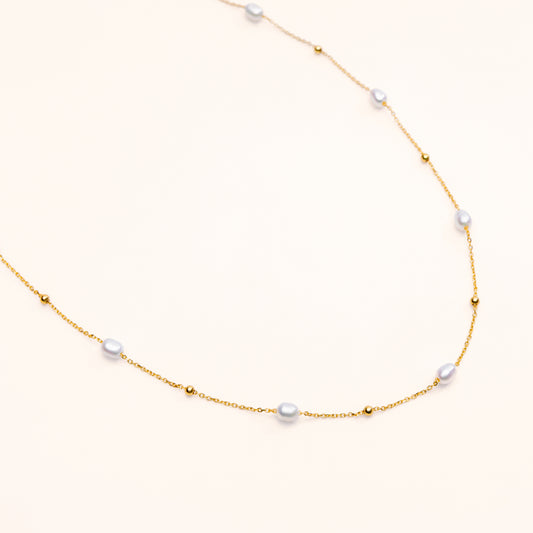
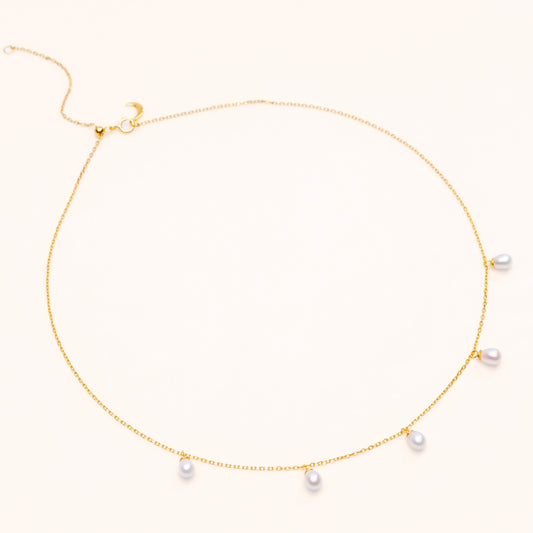
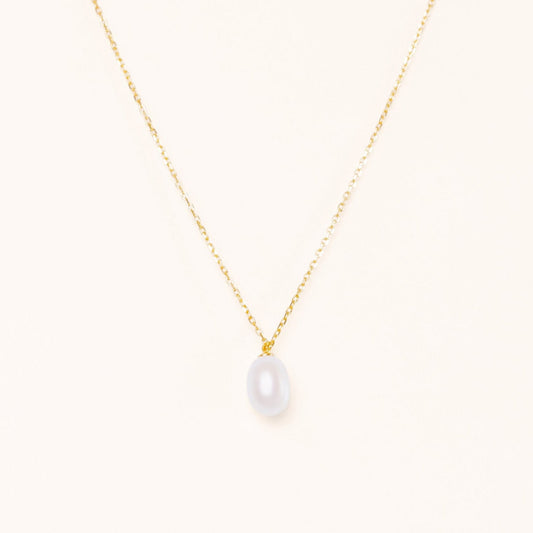
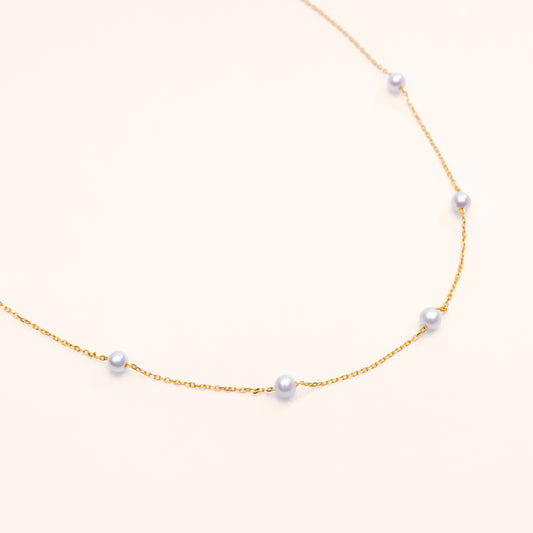
Gold-plated jewelry starts with a base metal — often sterling silver, sometimes brass or another alloy — and finishes with a thin layer of gold applied through electroplating. There's no legally required minimum thickness for the word "plated" alone, which is why plated pieces vary so much in how long they hold their color. At Pearl Luna, every plated piece starts with 925 sterling silver, not brass or base metal, and is finished in 18k gold to the thickness required for USFTC-compliant labeling. That silver base matters: even if the gold layer eventually softens with wear, you're left with solid sterling silver underneath, not a metal that turns your skin green. If you want the deeper mechanics of what "925" is doing under the plating, this guide to sterling silver breaks it down further.
Why plated jewelry is the most affordable of the three
Electroplating uses a small amount of actual gold, which is why plated pieces can sell for a fraction of solid gold or gold-filled prices without being "fake." It's the most accessible way to get a real 18k gold finish, which is a big part of why so much of Pearl Luna's range — freshwater pearl studs, station bracelets, pendant necklaces — sits comfortably under $100.
What gold vermeil adds
Gold vermeil is technically a category of gold-plated jewelry, but it comes with rules. Under U.S. FTC jewelry guidelines, a piece can only be called vermeil if it has a sterling silver base and a gold layer that's at least 10 karat fineness and a minimum thickness of 2.5 microns. That thicker layer is the entire point: vermeil resists everyday wear — lotion, light water contact, normal friction — noticeably longer than a standard thin-plate piece before any dulling shows through. The trade-off is a higher price for that added gold, since thickness is the input that actually costs money.
What gold-filled jewelry is (and isn't)
Gold-filled pieces skip electroplating altogether. A solid sheet of gold — usually 12k or 14k — is heat- and pressure-bonded to a brass core, creating a gold layer that's typically 5 to 100 times thicker than standard plating, depending on the manufacturer's specification. That bonded layer is mechanically attached rather than deposited a few atoms at a time, which is why gold-filled jewelry is the most wear-resistant of the three and often carries a "lifetime of daily wear" claim from the brands that sell it. It also tends to be the heaviest and most expensive, since it uses far more actual gold than a plated or vermeil piece of the same size.
Durability and price, side by side
As a rule of thumb, durability and price move together here: gold-plated is the least expensive and least gold-heavy, gold vermeil sits in the middle with a legally thicker layer over silver, and gold-filled uses the most gold and lasts the longest before any base metal can show through. None of the three is more "real" than the others — an 18k gold-plated piece is genuinely 18-karat gold, just less of it by volume than vermeil or fill. What changes is how many years of daily wear you can expect before the surface needs attention, and how much you're paying for that extra margin of time.
Why Pearl Luna builds on 18k gold-plated sterling silver

Every Pearl Luna piece is built on 925 sterling silver and finished in 18k gold plating, never brass — which is also why the collection is nickel-free and hypoallergenic for sensitive ears and skin. We chose plated silver over vermeil-grade thickness or gold-filled brass for one reason: it keeps a genuinely well-made piece — real freshwater pearls, lab-grown gemstones, solid silver underneath — at a price where you can build out a full jewelry wardrobe for under $100, layer necklaces without a second thought, or pick up a set of bracelets as a gift without the gold-filled price tag. If a piece ever needs a refresh, sterling silver underneath means it can be re-plated rather than replaced.
How to make gold-plated jewelry last as long as possible
The biggest factor in how long any plated piece keeps its color isn't the plating type — it's contact. Perfume, lotion, chlorine, and sweat all shorten the life of a gold finish, plated or vermeil alike, because they chemically interact with the surface layer. Putting jewelry on after you get dressed and after any spray products have dried, wiping pieces down with a soft cloth after wear, and storing them separately in a pouch rather than tangled in a dish all add real time to the finish. For the full routine, including what to avoid entirely, see our guide to cleaning sterling silver and gold-plated jewelry at home.
Frequently asked questions
Is gold vermeil better than gold-plated jewelry?
Vermeil generally lasts longer because U.S. guidelines require a thicker minimum gold layer over a sterling silver base. Standard gold-plated jewelry can still be high quality — Pearl Luna's is plated over solid sterling silver rather than brass — but vermeil's thickness requirement gives it a durability edge for the same style of finish.
Is gold-filled the same as gold-plated?
No. Gold-filled jewelry uses a solid sheet of gold mechanically bonded to a brass core, while gold-plated jewelry uses electroplating to deposit a much thinner gold layer onto a base metal. Gold-filled has substantially more gold by volume and typically outlasts plated jewelry, but it also costs more and is usually heavier.
How long does gold-plated jewelry actually last?
With normal care — avoiding direct contact with perfume, lotion, and water, and storing pieces separately — a well-made gold-plated piece over sterling silver can look good for years of regular wear. How long depends more on contact with chemicals and moisture than on age alone, which is why storage and application habits matter more than any single spec.
Can I wear gold-plated jewelry every day?
Yes, as long as you put it on after skincare and fragrance have dried and take it off before swimming, showering, or exercising heavily. Daily wear is fine; it's sustained contact with water and chemicals, not time itself, that wears plating down fastest.
Does Pearl Luna's jewelry turn skin green or tarnish quickly?
It shouldn't under normal wear, because the base is 925 sterling silver rather than brass or a nickel-heavy alloy, and the collection is nickel-free and hypoallergenic. Skin discoloration is usually a base-metal or moisture issue rather than something that comes from genuine sterling silver and 18k gold plating.