
How to Clean Sterling Silver and Gold-Plated Jewelry at Home (Without Damaging It)
Most sterling silver and gold-plated jewelry only needs warm water, a drop of mild dish soap, a soft brush, and a careful dry. The damage people do at home almost never comes from dirt — it comes from the cleaning method. Toothpaste, baking soda, silver dips, and ultrasonic machines all remove material, and on 18k gold plating or a freshwater pearl, that material is not coming back.
Here is the safe method, stone by stone and metal by metal.
What you need to clean jewelry at home
- A small bowl of lukewarm water (not hot)
- One drop of mild, dye-free dish soap
- A baby toothbrush or soft makeup brush
- Two lint-free microfiber cloths — one damp, one dry
- A soft towel to work over, so nothing bounces down a drain
That is the whole kit. You do not need a polishing compound, a jewelry machine, or a chemical dip for anything in a normal collection.
How to clean sterling silver jewelry
To clean 925 sterling silver, soak the piece for two to three minutes in lukewarm soapy water, brush it gently along the surface with a soft toothbrush, rinse in clean water, and dry it completely with a microfiber cloth. Drying matters more than washing: silver tarnishes faster when it sits damp.
If light tarnish remains — that warm grey-gold film on the surface — use a treated silver polishing cloth and rub in straight lines rather than circles. Work only on the plain metal sections. Stop before you reach any pearls, stones, or gold-plated areas.
Why sterling silver tarnishes in the first place
Tarnish is a chemical reaction, not dirt. Silver reacts with sulfur compounds in the air, in wool, in rubber bands, in some lotions, and in perspiration, forming a thin layer of silver sulfide on the surface. It is cosmetic and reversible. It also happens far more slowly to jewelry that is worn regularly and stored dry — skin contact and airflow keep silver brighter than a drawer does.

How to clean 18k gold-plated jewelry
Gold-plated jewelry should be wiped, not scrubbed. The plating is a genuine but thin layer of gold bonded over the sterling silver base, so anything abrasive — polishing cloths, baking soda, powdered cleaners, even a stiff brush — slowly thins it. Instead, dip a soft cloth in mild soapy water, wipe the surface, wipe again with a clean damp cloth, and dry immediately.
Never use a silver polishing cloth or silver dip on plated pieces. Those products are formulated to lift a microscopic layer off the surface, which is exactly what you are trying to protect. If you want the longer explanation of how plating thickness and quality work, we covered it in Is gold-plated jewelry worth it?
How to clean jewelry set with freshwater pearls
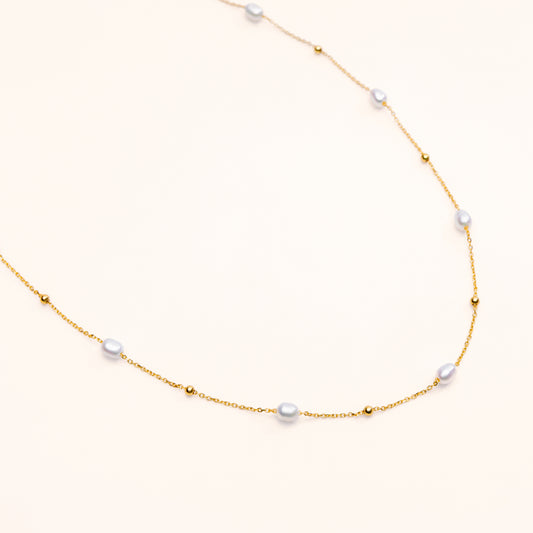
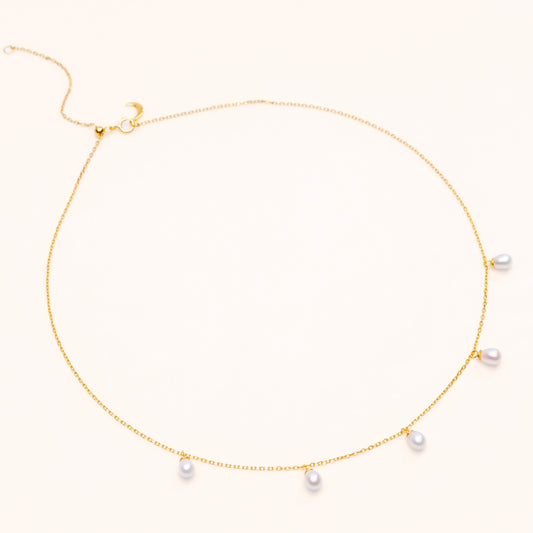
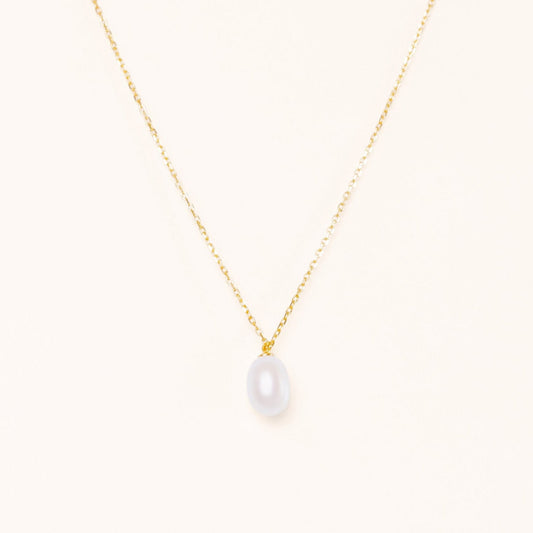
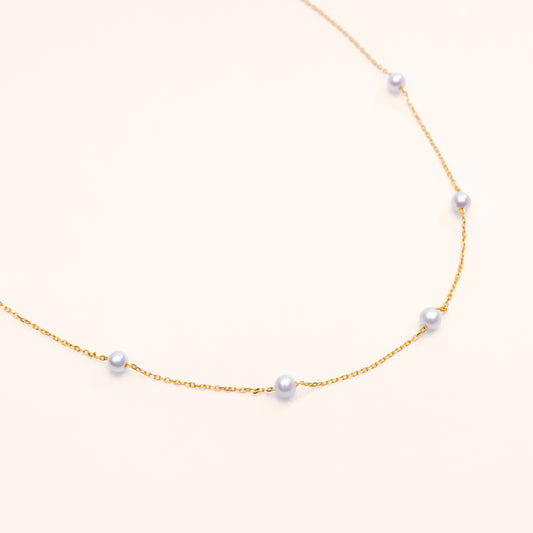
Pearls should never be soaked. Nacre is soft — roughly 2.5 to 4.5 on the Mohs hardness scale, softer than a fingernail file — and it is porous, so water can travel into a drilled hole or weaken glue and silk thread. Wipe each pearl with a barely damp soft cloth, then dry it with a second cloth. That is all a pearl needs.
The habit that actually preserves pearls is timing: put jewelry on last, after perfume, hairspray, sunscreen, and moisturizer, and wipe it down before putting it away. Those products are mildly acidic or alcohol-based and dull nacre over time. Our full routine is in how to care for freshwater pearl jewelry, and it applies to every piece in our freshwater pearl collection.
How to clean lab-grown ruby, sapphire, emerald, and diamond settings
Lab-grown gemstones are chemically identical to mined stones, so they clean the same way: soapy water and a soft brush behind the stone, where a film of skin oil builds up and dulls the sparkle. Rinse and dry fully so no water sits in the setting.
Emerald is the exception to handle gently. Emeralds of any origin are more brittle than ruby or sapphire and are often treated with oils or resins that harsh cleaners can strip, so skip hot water and steam entirely. A quick wipe is safer than a soak for anything in our emerald jewelry range.
What never to use on jewelry
- Toothpaste and baking soda paste. Both are abrasives. They will brighten silver by sanding it, and they will scratch pearls and thin plating.
- Silver dip solutions. Fast and effective on plain silver flatware, damaging on plated pieces, pearls, and porous or treated stones.
- Ultrasonic and steam cleaners. The vibration can loosen settings and crack or separate pearls and emeralds.
- Rubbing alcohol, acetone, and household cleaners. Strip nacre and can attack adhesives in a setting.
- Hot water. Expansion and contraction stresses glued and strung components.
How often should you clean your jewelry?
Wipe everyday pieces with a dry cloth after each wear, and give them a proper soapy clean roughly once a month — more often for rings and bracelets, which collect hand cream and soap residue, and less for occasion pieces. Everything you clean should then go back into a dry, closed space rather than an open dish; how you store jewelry does more for it than how often you clean it, which we broke down in how to store jewelry so it doesn't tangle, tarnish, or scratch.
A note on what you are cleaning
Cleaning advice only works if you know what the piece is made of. Everything we make is 925 sterling silver, either finished in silver or plated in 18k gold to USFTC-compliant standards, set with real freshwater pearls and lab-grown gemstones. There is no brass base and no nickel, which is why the range is hypoallergenic and why soap and water is enough — there is no cheap core underneath waiting to react. Seventy years of working with pearls in Kobe, Japan sits behind that material choice, and it is what keeps most of our jewelry under $100 wearable for years rather than a season.
Frequently asked questions
Can you clean sterling silver with toothpaste?
You can, but you should not. Toothpaste contains mild abrasives that remove tarnish by physically sanding the surface, leaving fine scratches that make silver dull faster over time. It is also unsafe near pearls or gold plating. Lukewarm soapy water and a soft cloth achieve the same result without removing metal.
Does gold-plated jewelry tarnish?
Gold itself does not tarnish, so a well-plated piece stays bright as long as the plating is intact. What people call tarnish on plated jewelry is usually the base metal showing through where the layer has worn thin. Over sterling silver that shows as a soft grey; over brass it turns green, which is one reason we do not use brass.
Can I shower or swim in sterling silver jewelry?
Occasional water contact will not ruin sterling silver, but soap film dulls it and chlorine and salt water accelerate tarnish. Pieces with pearls or strung components should stay dry entirely. The simple rule is to remove jewelry before swimming, showering, and workouts, then wipe it dry before storing.
How do I clean a pearl necklace that is strung on thread?
Never submerge it. Wet thread stretches, weakens, and dries discolored, and it can wick moisture into the pearl's drill hole. Wipe each pearl individually with a barely damp cloth, dry with a second cloth, and lay the necklace flat to finish drying. Restring strung pearl necklaces every few years with regular wear.
What is the safest way to remove heavy tarnish from silver?
For plain sterling silver with no stones, a treated silver polishing cloth used in straight strokes is the safest home option. For heavily tarnished pieces that also contain pearls, plating, or gemstones, take them to a jeweler rather than experimenting — professional cleaning is inexpensive and avoids irreversible damage to the softer materials.