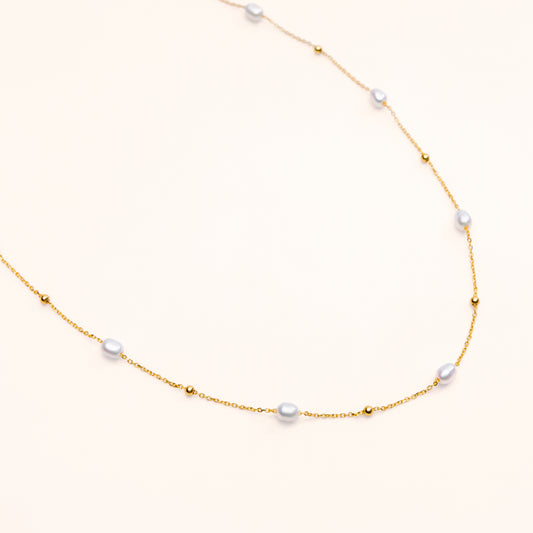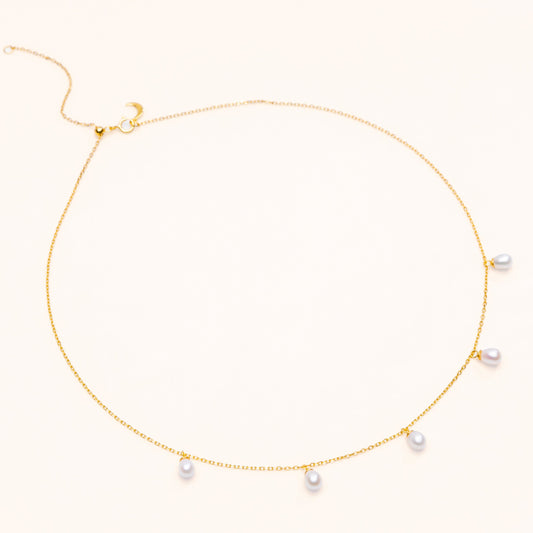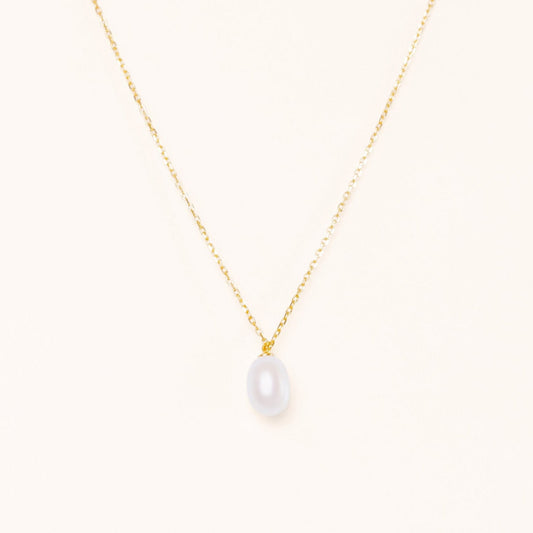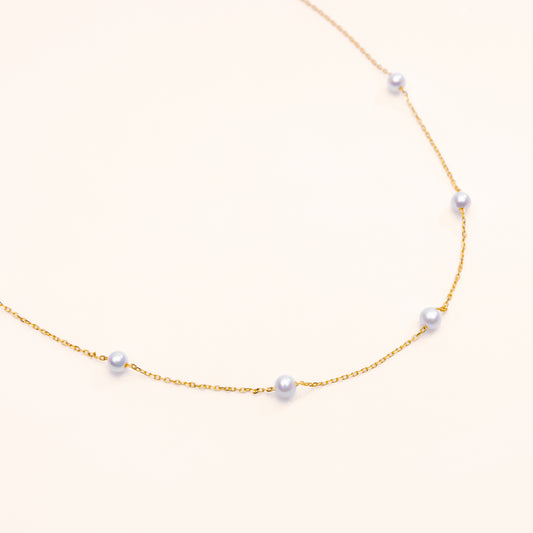

How to Fasten a Necklace or Bracelet by Yourself: 9 Tricks for Tiny Clasps
The easiest way to fasten a necklace by yourself is to close the clasp at the front of your neck, where you can see it, and then slide it around to the back. For a bracelet, tape or hook the ring end to your wrist so it stays still while your free hand works the clasp. The tricks below cover the rest, from long nails to cold fingers.
It is worth getting right now. Party season means more necklaces, more layering, and more evenings getting ready alone with five minutes to spare.
Why tiny clasps are hard to fasten alone
Most fine jewelry has a lobster clasp or spring ring on one end and a small jump ring on the other, and both ends move at once. Every trick below works for the same reason: it holds one end still so you only have to control the other.
How to fasten a necklace clasp by yourself
1. Fasten it in front, then turn it around
Hold the necklace backwards so the clasp sits under your chin, close it while looking down or into a mirror, then gently slide the chain around until the clasp rests at your nape and the pendant falls to the front. Turn it slowly with both hands so a pendant or pearl does not catch on your collar or hair. This is the fastest method for most chains.
2. Anchor the ring end against your neck
If you prefer to fasten at the back, pin the jump-ring end flat against the side of your neck with the thumb of one hand. Now only the clasp end moves. Open the lobster with your other thumbnail, guide it onto the anchored ring, and release. Tilting your head slightly forward gives your fingers more room.
3. Fasten it to the side, under your ear
Halfway between front and back is a sweet spot: you can see the clasp in a mirror if you turn your head, and your elbows are not straining overhead. Close it there, then slide it back.
4. Use a paperclip as a third hand
Unfold a paperclip into a loose S. Hook one end through the jump ring and hold the other end in your fist at your collarbone. Draping the clasp end over your shoulder, you now have a fixed target.

How to put on a bracelet by yourself
5. Tape the ring end to your wrist
The tape trick is the most reliable way to fasten a bracelet one-handed. Place a small strip of washi or paper medical tape over the jump-ring end on the inside of your wrist, wrap the bracelet around, and close the clasp with your free hand. Peel the tape off. Use a low-tack tape so no residue lands on pearls or plating.
6. Hook it with a paperclip
Thread an opened paperclip through the jump ring and hold the paperclip's other end between the fingers of the hand you are wearing the bracelet on. Pull it gently taut, then bring the clasp to the ring.
7. Let gravity do the work
Rest your forearm flat on a table, palm up. Lay the bracelet across your wrist so both ends hang down the inside, where you can see them. The weight of the chain keeps the ring end steady while you close the clasp.
Small fixes that make every clasp easier
8. Use the side of your nail, not the tip
Long or freshly manicured nails struggle with a lobster's tiny lever. Press the lever with the flat side of your thumbnail or the pad of your finger instead. Good light and warm hands help too.
9. Choose clasps you can manage before you buy
If fine clasps are a daily frustration, let it shape what you buy. Bracelets with a toggle or a slightly larger lobster are easier solo. Chains with an adjustable extender give you more rings to aim for. Browse our bracelets and necklaces with the clasp in mind, and remember that a bracelet that fits well is easier to close; our bracelet size guide shows how to measure.
Which clasps are easiest to fasten by yourself?
- Toggle clasp: the easiest alone. You simply slide a bar through a ring. Best on bracelets with a snug fit, since a loose toggle can slip open.
- Lobster clasp: the most secure everyday choice and very manageable with the anchoring tricks above. Larger lobsters are noticeably easier.
- Box clasp: common on pearl strands. It clicks shut by feel, so it is easier than it looks once you have done it twice.
- Spring ring: the trickiest. The small round catch needs a firm, precise pull, so use the tape or paperclip method.
- Magnetic converters: convenient, but less secure on heavier pieces and not suitable for anyone with a pacemaker or other implanted medical device.
Before you head out: check the clasp
Once it is fastened, give the chain a gentle tug at both sides of the clasp. A properly closed lobster or spring ring will not open under light pressure. If your necklace keeps rotating, our guide to why necklaces flip and slide has eight fixes. And never pry a stuck clasp open with your teeth. Our at-home jewelry fixes walk through a gentler way.
Every Pearl Luna piece is made in 925 sterling silver, some with 18k gold plating, with real freshwater pearls and lab-grown gems, and is nickel-free and hypoallergenic. We have worked with pearls in Kobe, Japan for 70 years. If you are layering for the holidays, start with our pearl necklaces. Shipping is free, and returns are accepted within 30 days.
Frequently asked questions
How do you put on a bracelet by yourself without help?
Tape the jump-ring end of the bracelet to the inside of your wrist with a small strip of low-tack tape, wrap the bracelet around, and close the clasp with your free hand. Peel off the tape. A paperclip hooked through the ring and held in your fingers works the same way, keeping one end still while you fasten.
What is the easiest necklace clasp to fasten on your own?
A toggle clasp is the easiest to fasten alone because you only slide a bar through a ring. A larger lobster clasp is the best balance of ease and security. Spring rings are the hardest. Whatever the clasp, fastening it at the front of your neck and then turning the necklace around makes it much simpler.
Are magnetic clasp converters a good idea?
Magnetic converters make fastening easy, especially for arthritic or stiff fingers, but they are less secure than a lobster clasp, particularly on heavier necklaces or bracelets that catch on clothing. They are not recommended for anyone with a pacemaker or another implanted medical device. Use them on lightweight pieces and check them often.
How can I tell if my necklace clasp is fully closed?
Give the chain a gentle tug on both sides of the clasp. A fully closed lobster or spring ring will hold under light pressure and the lever will sit flush. Look closely for the jump ring sitting inside the clasp's hook, not resting on the gate. If it opens with a light pull, refasten it.
How do you open a lobster clasp with long nails?
Use the flat side of your thumbnail or the pad of your fingertip on the lever, rather than the tip of the nail, which tends to slide off. Hold the clasp end between your other thumb and finger for leverage. A larger lobster clasp, or a paperclip to hold the ring end, makes it easier still.