
Why Does My Necklace Keep Flipping, Twisting, or Sliding? 8 Fixes for Clasps, Pendants, and Layers
A necklace keeps sliding, flipping, or twisting for one of four reasons: the clasp is heavier than the front of the necklace, the pendant is free to spin on its bail, the chain style naturally rotates, or the length sits on the wrong part of your neck. Each has a simple fix, and most take less than a minute. Here is how to diagnose yours and stop it for good, just in time for a season of scarves, coats, and party dressing.
Why does my necklace clasp keep sliding to the front?
The clasp slides to the front because gravity pulls the heaviest part of a necklace to the lowest point. If the clasp and jump ring weigh more than the pendant or front section, every movement of your shoulders nudges the chain around until the clasp settles at your collarbone. Very fine chains and short lengths make it worse, because they sit on the slope of the neck rather than hanging freely below it.
Fixes for a wandering clasp
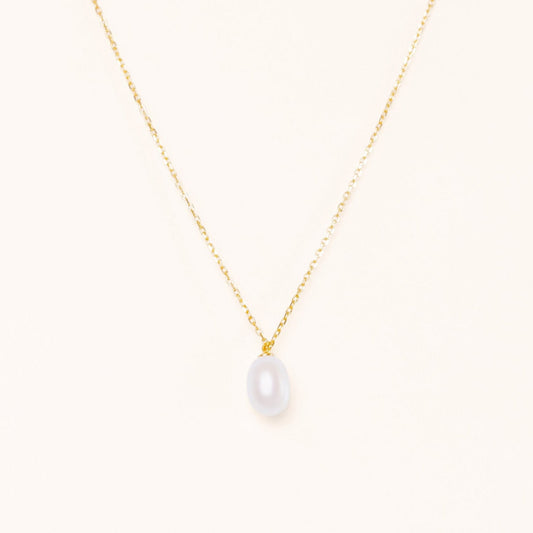
- Add weight to the front. A pearl pendant, a slightly larger pearl, or a second small charm at the center gives the front enough weight to stay down. This is the most reliable fix.
- Go one length longer. A necklace that hangs a little below the collarbone, rather than resting on it, rotates far less. If you wear 16 inches, try 18; see our pearl necklace length guide for where each length falls.
- Check the clasp itself. An oversized lobster clasp on a delicate chain is a common culprit. A neat, proportionate clasp moves less.
- Reduce friction from fabric. Textured knits, wool, and scarves grip the chain and drag it as you move. Over sweaters, a slightly heavier chain or a pendant that sits on skin rather than fabric stays put.
Why does my pendant keep flipping over?
A pendant flips when it can rotate freely on its bail (the small loop the chain runs through) and has a distinct front and back. Flat or one-sided pendants, such as discs, bars, and initials, are most prone to it, especially on chains that are much thinner than the bail opening. Each time you lean or turn, the pendant catches and rolls over.
Fixes for a flipping pendant
- Choose a shape with no wrong side. A round or near-round freshwater pearl looks the same from every angle, so even if it rotates, nobody can tell. It is one of the quiet practical reasons pearl pendants are such easy everyday pieces.
- Match the chain to the bail. A chain that fills more of the bail gives the pendant less room to spin.
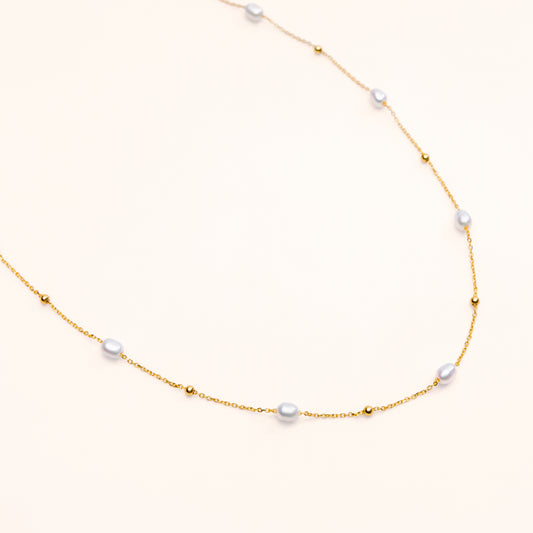
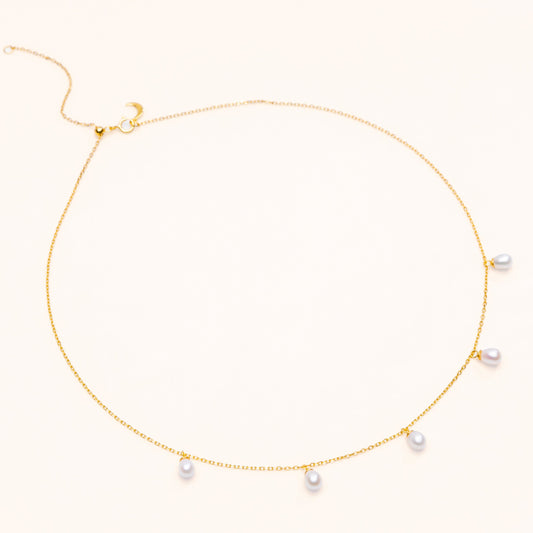
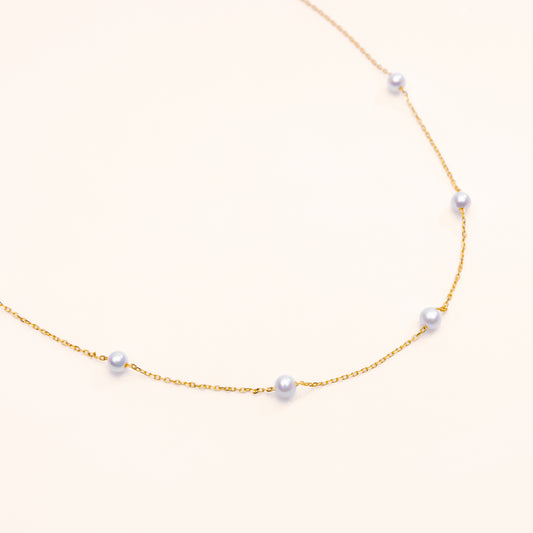
- Look for fixed or station settings. Pearls set directly into the chain, as on a station or drop-chain necklace, cannot flip at all.
- Balance gemstone accents. Pendants with a stone on one face, such as our Halo pearl pendants with lab-grown ruby, sapphire, emerald, or diamond accents, sit best at a length where the pearl rests flat against the chest.
Why does my chain twist or kink?
Chains twist because of how their links are built. Rope chains and other twisted styles naturally coil back on themselves, and fine cable chains can kink when stored in a heap. Box and snake chains hold their shape best, which is why they are often recommended for pendants. Our guide to necklace chain types compares how each one behaves.
Fixes for a twisted chain
- Let it unwind. Hold the necklace by one end of the clasp and let it hang. It will spin until the twist releases. Repeat from the other end if needed.
- Store it hanging or laid straight. Fastening the clasp before you put the necklace away, then laying it flat or hanging it, prevents most new kinks.
- Do not force a kink. Work a tight kink loose gently with two pins rather than pulling the chain straight, which can weaken the links.

How do I stop layered necklaces from tangling and twisting together?
Layered necklaces stay separate when each strand has a different length, weight, and texture. Two fine chains of similar length will wind around each other within an hour; a fine chain paired with a slightly heavier pearl strand, spaced about two inches apart, will not. Follow these rules:
- Space each layer roughly 2 inches apart, as in our layering spacing formula.
- Put the heaviest piece at the bottom so it anchors the stack.
- Mix textures: a pearl station chain next to a plain chain is far less likely to knot than two identical chains.
- Consider a layering clasp (a multi-strand connector) if you wear the same stack often.
If a stack does knot, our step-by-step guide to untangling a necklace chain walks you through freeing it without damage.
Why does my necklace slide to one side?
A necklace drifts to one side when something keeps pushing it there: a bag strap, a seatbelt, uneven shoulders, or the habit of resting your chin on one hand. Shorter chains are most affected. Moving the bag to the other shoulder, choosing a length that sits below the collarbone, or wearing a slightly heavier pendant usually solves it.
A quick diagnosis checklist
- Clasp ends up in front: add weight to the front or go one length longer.
- Pendant shows its back: choose a round pearl, a fixed setting, or a chain that fills the bail.
- Chain looks coiled: let it hang to unwind, and store it fastened and straight.
- Layers knot: vary length, weight, and texture, and space them 2 inches apart.
- Necklace drifts sideways: look for a strap or habit pushing it, then lengthen slightly.
Every Pearl Luna necklace is made with real freshwater pearls, 925 sterling silver, and 18k gold plating, never brass, so it is hypoallergenic and nickel-free against the skin. Browse our pearl necklaces or the full necklace collection, with free shipping and 30-day returns.
Frequently asked questions
How do I keep my necklace clasp in the back?
Make the front of the necklace heavier than the clasp. A pearl pendant or a slightly larger center piece pulls the front down and keeps the clasp at your nape. Wearing a length that hangs just below the collarbone, rather than on it, also stops the chain from rotating as you move your shoulders.
What type of necklace chain does not twist?
Box chains and snake chains twist the least because their links are rigid and hold a flat shape. Fine cable chains can kink if stored loosely, and rope chains naturally coil. Whatever the chain, storing the necklace fastened and laid straight or hung prevents most twisting before it starts.
Why does my pearl pendant keep turning around?
A pendant turns when its bail is loose on a thin chain, letting it rotate as you move. With a round freshwater pearl, rotation is rarely noticeable because the pearl looks the same from every side. If your pendant has a gemstone accent on one face, a chain that fits the bail more snugly will reduce turning.
Can layering necklaces damage them?
Layering is safe for well-made necklaces, but tangled chains can be stretched or kinked if pulled apart roughly. Space layers about two inches apart, vary chain weights, and take the stack off before sleeping or exercising. Store each necklace separately and fastened so the layers never knot in your jewelry box.