
How to Judge Pearl Quality: Luster, Surface, Shape, and Matching
Pearl quality comes down to seven things you can assess yourself: luster, surface quality, shape, size, colour, nacre and matching. Of those, luster matters most. A pearl with strong luster looks lit from within and reflects a sharp image of whatever is near it; a dull pearl looks chalky and flat no matter how large or how round it is. Once you know what to look at, you can judge a strand in a photograph or in your hand in about thirty seconds.
Here is how each factor works, and how much weight to give it when you are spending real money.
Luster: the single most important pearl quality factor
Luster is the sharpness and intensity of light reflected off a pearl's surface. To test it, hold the pearl under a single light source and look at the reflection. On a high-luster pearl you can see the outline of the light — even the edge of a window frame — reflected crisply on the curve of the pearl. On a low-luster pearl the reflection blurs into a soft, milky glow.
Luster comes from the nacre: hundreds of microscopic aragonite layers the mollusc lays down around the irritant. Thicker, more evenly deposited nacre reflects and refracts light more sharply. It is the one factor that cannot be improved after the pearl leaves the shell, and it is the reason two pearls of identical size and shape can differ enormously in price.
Practical rule: if you have to choose between a larger pearl with soft luster and a slightly smaller one that glows, choose the glow. Size reads as a number; luster is what people actually notice across a room.
Surface quality: what blemishes are acceptable
Almost every real pearl has some surface irregularity, and a completely flawless pearl is rare enough to be priced accordingly. What matters is how visible the marks are at normal viewing distance and where they sit. Small pits, faint ridges or a light spotting on the back of a pearl that will face your skin are cosmetically irrelevant. A visible crack, a chip, or a blemish on the face of a solitaire pendant is not.
Look for marks that break the surface rather than sit within the sheen, and check the area around the drill hole, where damage is most common and most structurally serious. Perfectly spotless pearls at a low price are usually a sign of a coated or imitation bead rather than a bargain — our guide to telling real pearls from fakes covers the tests for that.

Shape: round is priciest, but not always best
Round pearls command the highest prices because they are the hardest for a mollusc to produce, but shape is a preference factor more than a quality one. Freshwater pearls grow in a wide range of shapes, and several of them are more interesting than a perfect sphere:
- Round and near-round — classic, formal, the reference point for pricing.
- Oval and button — flattened on one side; excellent value in studs, where only the face shows.
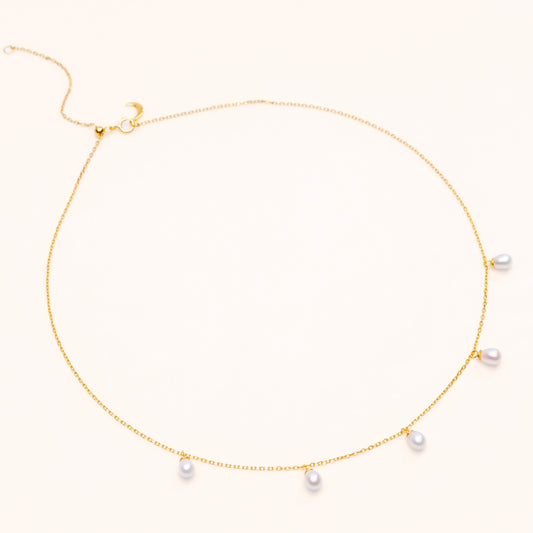
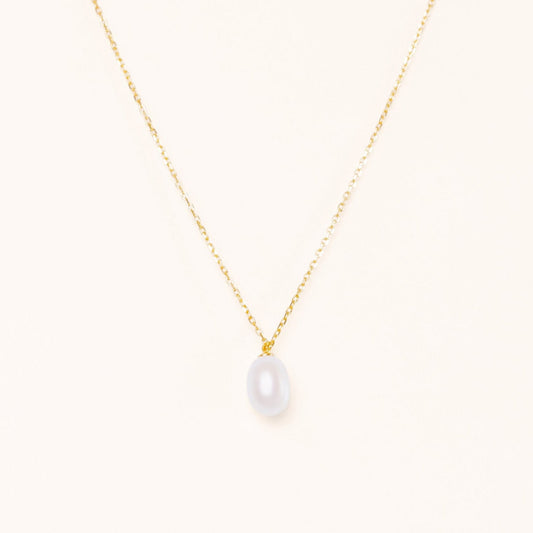
- Drop and teardrop — elongated; ideal for pendants and earrings, where the shape does the styling work.
- Baroque — irregular, often with high luster and strong character; the most modern-looking option and usually the best value per millimetre.
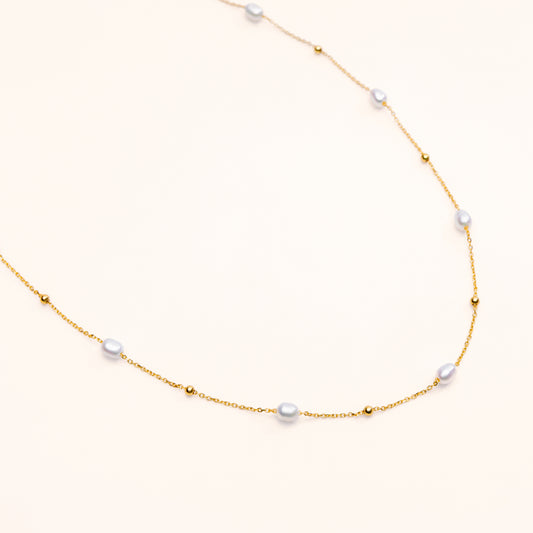
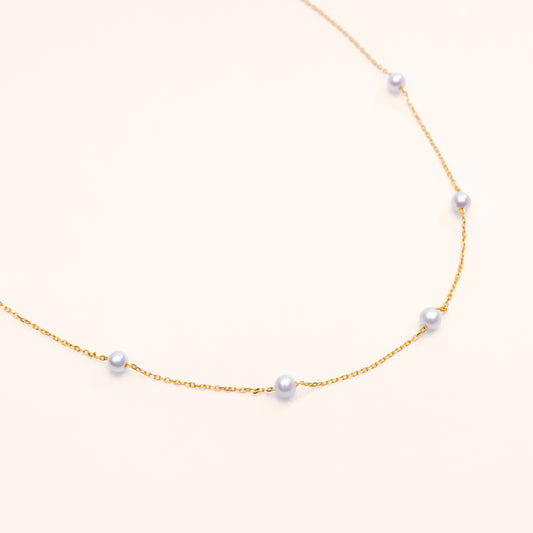
If you want the pearl to read as traditional, buy round. If you want it to read as contemporary, baroque and drop shapes get you more visual presence for the same budget. You can see the range across our pearl jewelry collection.
Size: how much a millimetre costs
Freshwater pearls are measured in millimetres, and price rises steeply rather than evenly with size because large pearls take longer to grow and fewer survive the process. Most everyday jewelry sits between 6mm and 9mm. Below about 6mm a pearl starts to disappear against the collarbone; above 10mm it becomes a statement piece rather than a daily one.
For a first pair of studs, 7–8mm is the sweet spot: substantial enough to be seen, small enough to wear to work. We go deeper on this in our pearl size guide.
Colour and overtone
Freshwater pearls occur naturally in white, cream, pink, peach and lavender, and are also commonly dyed to produce black, grey and deeper colours. Body colour is the dominant shade; overtone is the translucent secondary tint that floats above it — a rose or silver cast on a white pearl, for example. Overtone is a large part of why one white strand looks warm and another looks cool.
No colour is objectively better. Choose against your skin and your existing metals: rose and cream overtones sit well with gold and warm complexions, silver and lavender overtones with cool ones.
Matching: the factor people forget
Matching is how consistently the pearls in a multi-pearl piece agree with each other in size, shape, colour and luster. It is easy to overlook in a single photograph and very obvious in person. On a strand or a pair of studs, one pearl that is slightly greyer or noticeably duller than its neighbours will draw the eye every time.
Judging matching is why it is worth looking at a listing photo taken in even light rather than a heavily styled shot. Scan across the pearls and ask whether any single one stands out. On deliberately mismatched or baroque designs this does not apply — irregularity is the point — but on a classic strand, consistency is a genuine mark of careful sorting, and sorting is skilled, slow work.
What AAA, AA and A grades actually mean
The A-to-AAA grading scale used for freshwater pearls is not regulated by any independent authority. Each seller defines it, so an AAA pearl from one shop may sit at AA elsewhere. It is a useful shorthand within a single retailer's range, and meaningless as a comparison between retailers.
The more reliable reference is the GIA's set of pearl value factors — size, shape, colour, luster, surface quality, nacre quality and matching — which describes pearls rather than ranking them. Treat a seller's letter grade as a starting point, then judge luster and surface for yourself in the photographs. A shop willing to publish close, unretouched images is telling you something in itself.
One note specific to freshwater pearls: most are tissue-nucleated, meaning they are nacre nearly all the way through rather than a thin coating over a bead. That is why a good freshwater pearl wears well over decades and why nacre thickness is less of a worry here than with bead-nucleated saltwater pearls.
How to apply this when you are shopping
Work in this order: check luster first, then surface, then decide shape and size on preference, then check matching if the piece has more than one pearl. Confirm what the setting is made of — real pearls set in plated brass will outlast the metal holding them. Everything at Pearl Luna is 925 sterling silver with 18k gold plating, never brass, which is why our pieces stay hypoallergenic and nickel-free.
Quality assessed this way does not require a large budget. Much of our range, including well-matched studs and everyday strands, sits under $100, and our pearl necklaces are sorted by hand against the same factors above. Seventy years of working with pearls in Kobe, Japan mostly teaches you what to reject.
Frequently asked questions
What is the most important factor in pearl quality?
Luster is the most important factor. It is the sharpness and intensity of light reflected from the pearl's surface, produced by the nacre layers. High-luster pearls reflect a crisp image of nearby light sources; low-luster pearls look chalky. Luster cannot be added after harvest, so it separates good pearls from ordinary ones more than size or shape does.
Does AAA grade mean a pearl is high quality?
Not reliably. The A-to-AAA scale for freshwater pearls is set by each seller, not by an independent body, so grades are not comparable between retailers. Use a grade to compare pieces within one shop's range, then judge luster, surface quality and matching yourself from clear photographs before you buy.
Are pearls with small blemishes still good quality?
Yes. Nearly all genuine pearls have minor surface characteristics, and small pits or faint ridges are normal rather than defects. What matters is visibility at arm's length and placement — a mark hidden against the skin is irrelevant, while a crack, chip or blemish on the face of a solitaire pendant reduces both beauty and durability.
Are baroque pearls lower quality than round pearls?
No. Baroque simply describes an irregular shape, not a defect. Round pearls cost more because roundness is rarer, but baroque pearls often have exceptional luster and a more contemporary look. They typically offer the most visual presence for the price, which makes them a strong choice for pendants and statement earrings.
What size freshwater pearl should I buy?
For everyday wear, 7–8mm suits most people: visible without being formal, and appropriate for work. Choose 6mm or under for very delicate, layered looks, and 9–10mm or larger for statement pieces. Price rises steeply with size, so dropping a millimetre often buys noticeably better luster for the same budget.