
How to Pair Pearls With Colored Gemstones: A Fall Guide to Ruby, Sapphire, Emerald, and Diamond
Pearls pair with every colored gemstone, but each stone changes what the pearl says. Ruby makes pearls feel warm and evening-ready, sapphire makes them cooler and more polished, emerald turns them richly seasonal, and diamond keeps them classic. This guide walks through how to pair freshwater pearls with lab-grown ruby, sapphire, emerald, and diamond — by outfit color, by metal, and by occasion — so a pearl-and-gemstone piece looks deliberate rather than busy. It is written for fall, when jewel tones come back into wardrobes and a small flash of color against a pearl does a lot of work.
Why pearls and colored gemstones work together
Pearls and colored gemstones work together because a pearl is soft and matte-luminous while a faceted stone is sharp and bright, and the contrast makes both read more clearly. A pearl on its own is quiet; a small faceted stone on its own can look like a chip of glass. Set next to each other, the pearl gives the stone a calm backdrop, and the stone gives the pearl a focal point.
The proportions matter more than the stone itself. In most of our pieces the gemstone is a small accent — a 2 to 3 mm faceted stone sitting above a 6 to 8 mm pearl — rather than an equal partner. That ratio is what keeps the combination wearable in daylight. A large colored stone paired with a large pearl tips into costume territory quickly; a small stone with a mid-sized pearl stays refined.
One practical note before the pairings: all of our gemstones are lab-grown, which means they are chemically and optically the same as mined stones — real corundum for ruby and sapphire, real beryl for emerald, real carbon for diamond — at a fraction of the cost. If you want the background on how that works, read our guide to lab-grown ruby, sapphire, and emerald.
Ruby and pearl: the warm, evening pairing
Ruby and pearl is the warmest of the four pairings and the one that reads most clearly as "occasion." Red against white is a high-contrast combination, so even a tiny ruby accent is visible from across a room, which makes it ideal for dinners, holiday parties, and anything after dark.
Best outfit colors: black, cream, camel, deep green, and navy. Ruby sings against black and cream; against navy and forest green it becomes a richer, more editorial jewel-tone combination that suits fall especially well. Avoid pairing ruby with orange-reds or coral tops, which fight the stone rather than frame it.
Best metal: 18k gold plating. Warm metal and a warm stone reinforce each other. Silver with ruby is crisp but reads a little colder; it works best with black.
How to wear it: keep ruby to one point of focus. A ruby-accent pearl pendant with plain pearl studs is balanced; a ruby pendant, ruby earrings, and a ruby bracelet together is a lot of red. If you want to coordinate, let the second piece be plain pearls. Browse the ruby collection for pendants, drops, and charm bracelets.
Sapphire and pearl: the cool, polished pairing
Sapphire and pearl is the most versatile pairing for work and everyday wear because blue is a cool neutral in most wardrobes. A small blue sapphire next to a white pearl looks composed rather than decorative, which is why it suits office dress codes, interviews, and daytime events.
Best outfit colors: white, grey, denim, navy, and soft pastels. Sapphire on a white shirt is one of the cleanest looks in jewelry. On navy it becomes tonal and quiet — a good choice if you want color without a statement. It also holds its own against black, though the effect is more formal.
Best metal: either. Sapphire is one of the few colored stones that looks equally right in silver and gold. Silver makes it cooler and more modern; gold makes it warmer and more classic. If your wardrobe leans grey and blue, choose silver; if it leans cream and camel, choose gold.
How to wear it: sapphire is subtle enough to repeat. A sapphire-accent pendant with sapphire drop earrings is fine because the color is low-contrast against skin. September is also sapphire's birthstone month, so this is the natural gift pairing right now; see our September birthstone guide and the sapphire collection.
Emerald and pearl: the rich, seasonal pairing
Emerald and pearl is the most distinctly autumnal pairing, because green is the jewel tone that sits most naturally next to fall fabrics — knitwear, tweed, corduroy, and leather. Green and white together feel botanical and fresh, so the combination avoids looking heavy even when the outfit is.
Best outfit colors: camel, rust, burgundy, cream, chocolate brown, and black. Emerald against burgundy or rust is a classic fall color story; against camel or cream it looks expensive and calm. It is less successful against bright blues or purples, which compete with the green.
Best metal: 18k gold plating, strongly. Gold warms the green and ties it to the fall palette. Emerald in silver can look slightly clinical unless the outfit is very dark.
How to wear it: emerald is a saturated color, so treat it like ruby and keep it to one focal piece. A single emerald-accent pearl pendant on a fine gold chain is enough on a chunky knit. If you already wear a lot of green, choose a pendant rather than earrings so the stone sits on the fabric rather than against your face. See the emerald collection.

Diamond and pearl: the classic, wear-anywhere pairing
Diamond and pearl is the pairing with no wrong occasion. Because a diamond is colorless, it adds brightness rather than color, so a diamond-accent pearl piece works with any outfit, any metal, and any dress code from casual to black tie.
Best outfit colors: all of them. The only consideration is contrast: on black and jewel tones the diamond sparkles more visibly; on white and cream it becomes almost invisible and the pearl does the work.
Best metal: either. Silver emphasizes the diamond's brightness; gold emphasizes the pearl's warmth.
How to wear it: this is the pairing to repeat freely. Diamond-accent pearl studs plus a diamond-accent pendant is a coordinated set without looking matched, because the accent is so small. If you are choosing one gemstone-and-pearl piece to wear daily, diamond is the safest choice; if you are choosing one for a specific season or outfit, choose color. Our earlier comparison of pearl studs versus diamond studs covers the earring version of this decision, and the diamond collection has pendants, drops, and studs.
Quick reference: which gemstone for which situation
If you want a one-line answer for each stone: choose ruby for evenings and holiday dressing; choose sapphire for work and daytime; choose emerald for fall knitwear and warm-toned outfits; choose diamond for anything you cannot predict. All four sit on the same freshwater pearl, so the pearl itself stays consistent across your collection — only the accent changes.
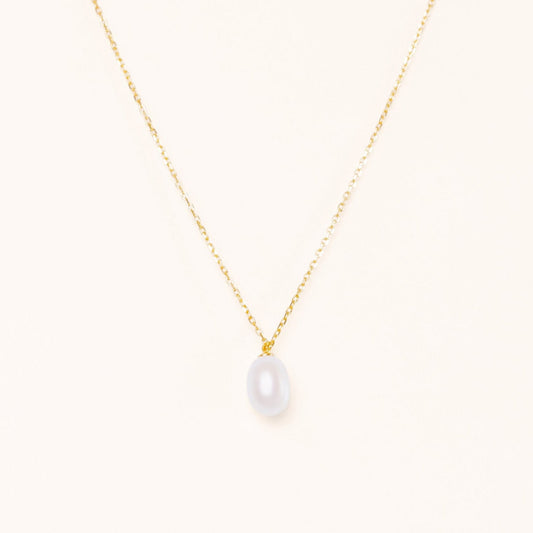
If you are buying a first gemstone-and-pearl piece, a pendant is easier to style than earrings because it sits against fabric rather than skin, and the chain lets you adjust where the color falls. Our necklaces collection groups the pendant styles together; most of the pearl-and-gemstone pendants are priced between $160 and $210, and plain pearl pieces start well under $100 in the under $100 edit.
Frequently asked questions
Do pearls go with colored gemstones?
Yes. Pearls pair well with ruby, sapphire, emerald, and diamond because the pearl's soft luster contrasts with the sharp brightness of a faceted stone. The combination works best when the gemstone is a small accent — roughly 2 to 3 mm next to a 6 to 8 mm pearl — so the piece stays refined rather than costume-like.
Which gemstone looks best with pearls?
Diamond is the most versatile because it adds brightness without color, so it suits any outfit or metal. Sapphire is the best everyday colored stone for work and daytime. Ruby is the strongest evening choice, and emerald is the most seasonal, pairing naturally with fall fabrics like knitwear, tweed, and camel or burgundy tones.
Should I wear gold or silver with pearl and gemstone jewelry?
It depends on the stone. Ruby and emerald look warmest and most natural in 18k gold plating. Sapphire and diamond look equally right in silver or gold, so choose the metal that matches your wardrobe: silver for grey, blue, and black; gold for cream, camel, and warm tones. Our pieces use 925 sterling silver as the base, never brass.
Can I wear ruby, sapphire, and emerald together?
You can, but keep it to one saturated stone per outfit for a quiet-luxury look. Ruby and emerald are both strong colors and compete when worn together. If you want to combine stones, pair one colored accent with plain pearl or diamond-accent pieces, which read as neutral and let the single color stay the focal point.
Are lab-grown gemstones set with pearls real gemstones?
Yes. Lab-grown ruby, sapphire, emerald, and diamond have the same chemical composition, crystal structure, and optical properties as mined stones; they are simply created in a controlled environment rather than dug out of the ground. They are graded on the same scales, and they cost significantly less, which is why we can pair them with real freshwater pearls at accessible prices.