
How to Spot a Real Black Friday Jewelry Deal: 8 Checks Before You Buy
A real Black Friday jewelry deal is a lower price on the same quality you would pay more for any other week: genuine metal, genuine pearls or gems, and a return policy that still protects you. The quickest way to tell is to ignore the percentage on the banner and read the product's material line first. Here are eight checks that take a few minutes each and will save you from the most common holiday-sale traps.
1. Ignore the percentage and check the "before" price
A discount is only as honest as the price it is measured against. "70% off" means little if the original price was set high specifically so it could be cut. In the US, the FTC's long-standing Guides Against Deceptive Pricing say a "former price" should be one the item was actually offered at, in good faith, for a reasonable period; not every seller follows that closely.
What to do: screenshot the pieces you want in early November, then compare on the day. If the "was" price on Black Friday is higher than what you saw three weeks earlier, the discount is partly for show. A modest, steady 15–25% off a fair everyday price is often a better buy than a dramatic markdown from an inflated one.
2. Read the metal line: sterling silver vs. "silver-tone"
The single biggest quality gap in sale jewelry is the base metal. Look for "925 sterling silver" (92.5% pure silver) stated plainly. Wording like "silver-tone," "silver color," "fashion metal," or "alloy" usually means brass, copper or zinc alloy underneath, which can tarnish quickly, irritate sensitive skin, or turn it green.
If the listing doesn't name the base metal at all, assume it isn't sterling. Our guide to what 925 sterling silver means covers the stamps and phrases to look for.
3. Check how the gold is described
"18k gold plated over sterling silver" and "gold color" are not the same product. The first is a real layer of gold over a precious-metal base; the second may be a lacquer or coating over brass. Good listings name the karat of the plating and the metal beneath it. At Pearl Luna, every gold piece is 18k gold plating over 925 sterling silver, never brass, and the plating is made to meet US FTC guidelines.
4. Make sure the pearls are actually pearls
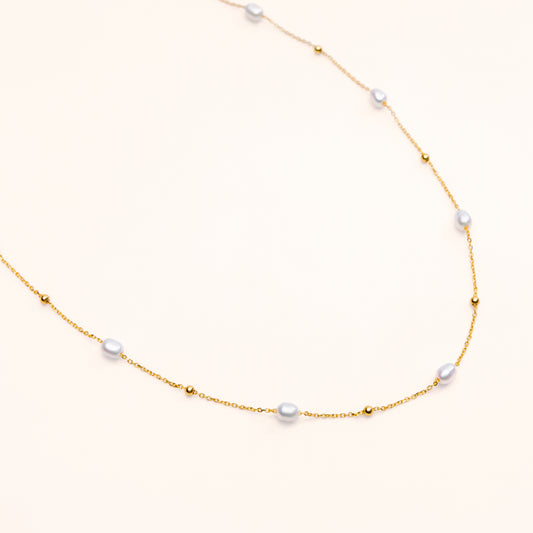
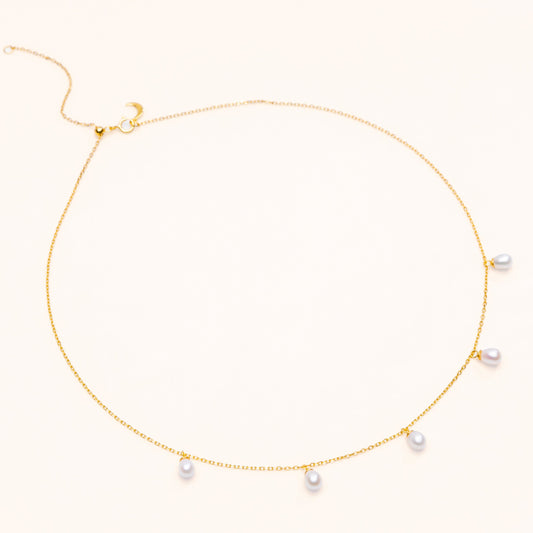
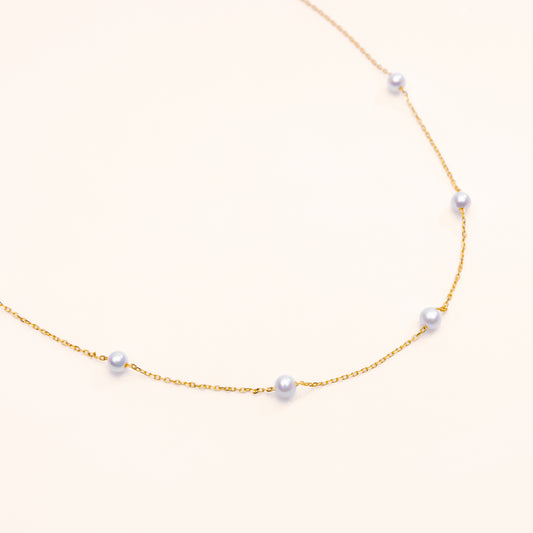
Real cultured pearls are described as "freshwater pearls," "cultured pearls," or by type (Akoya, Tahitian, South Sea). Be wary of "shell pearl," "glass pearl," "pearl-effect bead," "faux pearl," or simply "pearl-color." These are coated beads, and their surface can chip or peel within a season.
Two quick tells in photos: real freshwater pearls show slight variation in shape and tone from pearl to pearl, and close-ups show depth of glow rather than a flat, uniform shine. For hands-on tests once your order arrives, see how to tell if pearls are real.

5. Know the difference between lab-grown and "simulated" gemstones
A lab-grown ruby, sapphire, emerald or diamond has the same chemistry and crystal structure as its mined counterpart; it is grown in a controlled environment rather than dug from the ground. A "simulated" or "created-look" stone is something else entirely, usually glass or cubic zirconia in the right color.
Both can be pretty, but they are not equal value. If a listing says "ruby-red crystal" or "emerald-color stone," you are not buying a lab-grown emerald, whatever the price. Browse our lab-grown ruby pieces to see how a properly described gemstone listing reads.
6. Compare by specification, not by headline price
Two "pearl pendant necklaces" at the same sale price can be very different products. Line them up on the details that drive cost:
- Pearl size in millimeters (a 9mm pearl costs meaningfully more than a 6mm one of the same quality)
- Chain length and whether it is adjustable
- Clasp and finding quality: lobster clasps and secure earring backs outlast spring rings and thin push-backs
- Gemstone type, named precisely
If one listing gives all of this and another gives none, the vague one is not the bargain it looks like.
7. Read the return policy before you check out
A sale price is only a deal if you can return the piece when it doesn't suit. Watch for "final sale" labels on discounted jewelry, short return windows that close before the gift is even opened, and restocking or return-shipping fees that quietly eat the discount.
If you are buying for someone else, look for a window long enough to cover the holidays, and ask whether a gift receipt or exchange is possible. Pearl Luna offers free shipping and 30-day returns, which is the baseline we'd suggest holding any jewelry retailer to.
8. Do the math on bundles and "free gift with purchase"
Bundles can be excellent value, or a way to move slow sellers. Divide the bundle price by the number of pieces you would actually wear, not the number in the box. A free gift is worth exactly what you would have paid for it on its own, which, if you didn't want it, is nothing.
What's worth buying on sale (and what to skip)
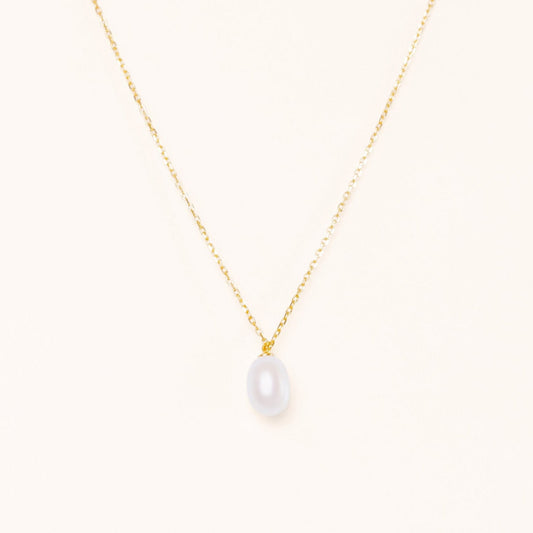
Holiday sales are best for everyday staples you already know you want: pearl studs, a single-pearl pendant, a simple bracelet. You can judge these easily from specs, and you will wear them enough to justify the purchase. Our jewelry under $100 is a good place to start for those.
Be more cautious with trend pieces, oversized statement jewelry bought on impulse, and anything with vague material descriptions. If you're shopping for gifts, our holiday gift guide by budget pairs well with these checks, and the Gifts collection gathers the pieces we recommend most often.
Frequently asked questions
Is Black Friday a good time to buy jewelry?
It can be, if you have done your homework. Black Friday is a good time to buy everyday staples like pearl studs or a pendant you have already researched. Track prices from early November, confirm the materials, and check the return window. Avoid impulse buys driven only by a large percentage-off banner.
How can I tell if a jewelry discount is fake?
Compare the sale's "original" price with what the item cost a few weeks earlier. If the reference price jumped shortly before the sale, the discount is inflated. Also be wary of permanent "limited-time" countdowns and of listings that never name the metal, pearl type, or gemstone. Honest sellers state specifications clearly.
Are lab-grown gemstones a good deal?
Yes, for most buyers. Lab-grown ruby, sapphire, emerald and diamond share the chemistry and crystal structure of mined stones, so they look and wear the same, usually at a lower price. Just make sure the listing says "lab-grown" or "lab-created" rather than "simulated," "crystal," or a color word like "ruby-red."
Is gold-plated jewelry worth buying on sale?
Gold-plated jewelry is worth buying when the plating sits over 925 sterling silver and the karat is stated, such as 18k gold plating. That combination is hypoallergenic for most people and holds up well with basic care. Skip pieces described only as "gold color" or "gold-tone," which often hide a brass base.
Should I buy holiday jewelry gifts early?
Buying in late November gives you time to check the piece in person, exchange it if needed, and avoid peak shipping delays in December. Confirm the retailer's return window covers the date the gift will actually be opened, and keep the packaging and receipt until after the holidays in case it needs to go back.