
Should Your Jewelry Match? How to Coordinate Earrings, Necklaces, and Bracelets
Your jewelry does not need to match — it needs to coordinate. A perfectly matched set can read as formal and a little dated, while pieces that share one common thread (a metal tone, a pearl, a gemstone color) look considered and modern. The good news: coordination follows a few simple rules, and once you know them you can pair almost anything in your jewelry box in under a minute.
Should your jewelry match? The short answer
No — jewelry should coordinate, not match. Stylists generally agree that pieces should share at least one visual element, such as metal color, stone type, or overall scale, but identical sets are reserved for formal occasions. Repeating one element ties a look together; repeating every element can make it feel like a uniform.
Think of it the way you'd build an outfit. You wouldn't wear a top, trousers, and shoes in the exact same fabric — you'd pick pieces that talk to each other. Jewelry works the same way.
Rule 1: Coordinate your metals first
Metal tone is the single most noticeable element of a jewelry combination, so settle it first. If your necklace is gold, gold or two-tone earrings will always work; a lone silver piece among gold ones tends to look accidental rather than deliberate.
That said, mixing metals is fine when it's clearly intentional — two or more pieces in each tone, or a single two-tone piece that bridges the gap. A pearl bracelet with both silver and gold beads, for example, lets you wear either metal everywhere else. If you're not sure which tone flatters you most, our guide to choosing gold or silver for your skin tone walks through it.
One practical note: coordination only works if your pieces keep their color. Solid 925 sterling silver and quality 18k gold plating hold their tone over time, while cheap brass-based pieces drift toward dull brown and throw off an otherwise coordinated look.
Rule 2: Repeat one element — the echo principle
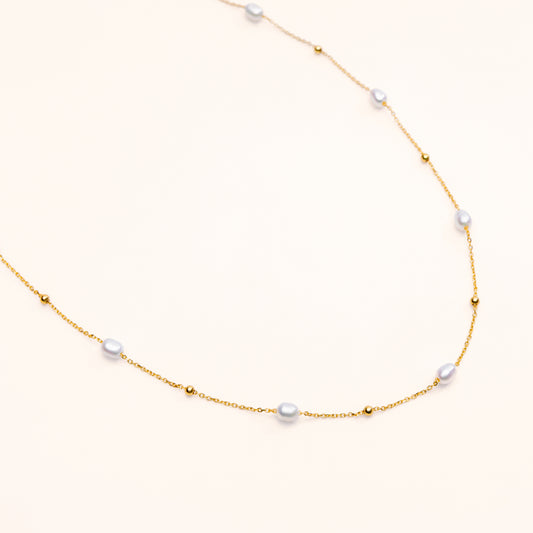
The easiest way to make separates look like a set is to repeat exactly one element. Wearing pearl studs with a freshwater pearl pendant creates an instant connection, even if the two pieces come from different collections and have different settings. The same trick works with color: a necklace with a blue lab-grown sapphire accent pairs naturally with sapphire earrings, or simply with a blue detail in your outfit.

Echo one element, not all of them. Pearl earrings, a pearl necklace, a pearl bracelet, and a pearl ring worn together can feel costume-like. Two pearl pieces plus one plain metal piece almost always looks better than four pearl pieces.
Rule 3: Pick one focal point, keep the rest quiet
Every combination needs a hierarchy. Choose one piece to be the focal point — a statement earring, a cascade necklace, a gemstone pendant — and keep everything else simple. If your earrings are doing the talking, wear a delicate chain or skip the necklace entirely. If your necklace is layered or bold, small studs are enough.
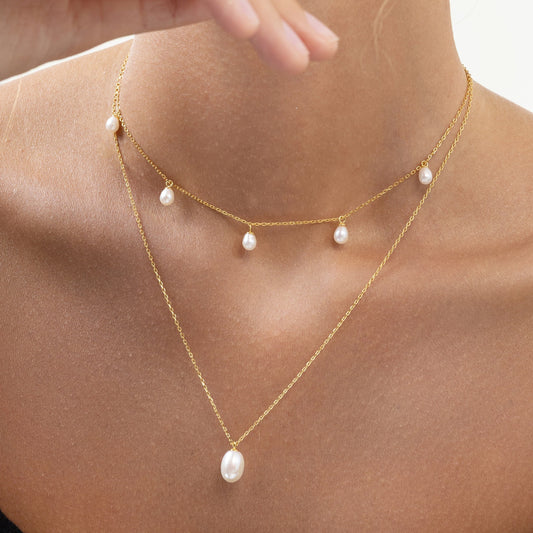
Scale matters here too. Dainty pieces belong with dainty pieces; one oversized item among fine chains will overwhelm them. If you love a fuller look, layer several delicate necklaces instead of adding one heavy one — our guide to layering pearl necklaces covers spacing and lengths.
Three foolproof combinations to copy
The everyday minimum
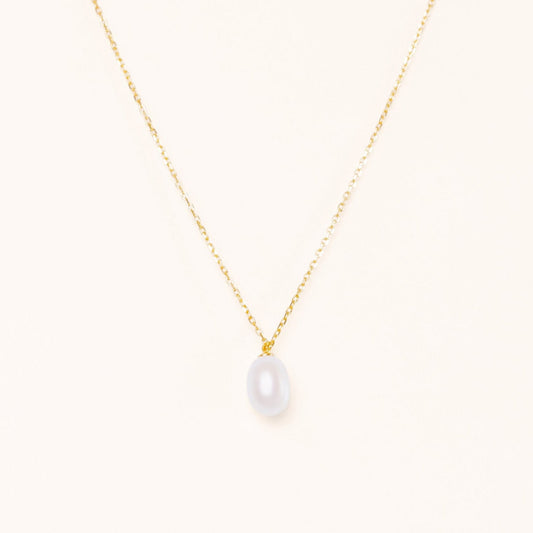
Pearl studs plus a single-pearl pendant in the same metal. Two pieces, one echoed element, zero effort. This is the combination to reach for on mornings when you have no time to think, and both pieces are easy to find under $100.
The polished work look
Small gold hoops or studs, a pearl pendant at collarbone length, and a slim bracelet. The necklace is the quiet focal point; the earrings and bracelet frame it without competing. Everything sits close to the body, so nothing catches on keyboards or coats.
The occasion look
A statement pearl or gemstone earring with bare neck, or a bold necklace with tiny studs — never both at full volume. Add a simple bracelet if your sleeves are short. One focal point, one supporting piece, done.
When a matched set does make sense
Matched sets earn their place at formal events and as gifts. A bride wearing matching pearl earrings and necklace looks classic, not dated, because formality is the point. And a coordinated two-piece set is one of the safest jewelry gifts you can give — the recipient never has to wonder what goes together. Because our pieces share the same freshwater pearls and the same 925 sterling silver and 18k gold-plated finishes, almost any two Pearl Luna pieces in the same metal work as an informal set.
Frequently asked questions
Do earrings and necklace have to be the same metal?
They don't have to be, but matching metals is the safest choice. If you mix, make it look deliberate: wear at least two pieces in each tone, or include a two-tone piece that contains both metals. A single odd-metal-out piece tends to read as accidental rather than styled.
Can you wear pearls and gemstones together?
Yes — pearls pair beautifully with colored gemstones. The classic approach is a pearl base with one color accent, such as a pearl necklace with a lab-grown sapphire, ruby, or emerald detail. Keep the color story to one gemstone hue per outfit so the combination looks intentional.
Can you wear gold and silver jewelry at the same time?
Yes, mixed metals are firmly in style — the key is balance. Wear two or more pieces of each tone, or anchor the mix with a two-tone piece. Avoid a single silver item among all-gold pieces, which looks unplanned rather than eclectic.
How many pieces of jewelry should you wear at once?
Three to five pieces suits most outfits: earrings, one or two necklaces, and a bracelet or ring. More than that, keep everything small and delicate. Whatever the count, choose one focal-point piece and keep the rest quiet so the look has a clear hierarchy.
Is it OK to wear a full matching jewelry set?
Yes, in the right context. Matched sets suit weddings, black-tie events, and gifting, where a classic, formal look is the goal. For everyday wear, most stylists suggest breaking the set up — wear the earrings with a different necklace so each piece feels fresh.