
Why Does Jewelry Turn Your Skin Green? Causes, Fixes, and Metals That Won't
Jewelry turns your skin green when the metal it is made from reacts with sweat, skin oils, lotion, or humidity and leaves a harmless residue behind. The culprit is almost always copper: brass and bronze are copper alloys, and many cheap "gold" pieces are brass with a whisper-thin coating. The green mark is not an allergy and it will not hurt you, but it is a reliable sign of what the piece is actually made of. Here is why it happens, why it is worse in some seasons and on some people, and how to buy jewelry that will not do it.
What actually causes the green mark
The green (sometimes grey-black) tint is copper oxidizing on your skin. When copper in the metal meets the acids in perspiration, the chlorides in sweat, or the chemicals in lotion, sunscreen, and hand sanitizer, it forms copper salts. Those salts are green, and they transfer to your skin in exactly the spot the metal sits: a band around a finger, a line under a bracelet, a shadow on the neck.
Three things decide how strongly this happens. The first is how much copper the metal contains. Brass is roughly two-thirds copper, so it stains readily. The second is your body chemistry: people with more acidic sweat, or who are hot and active, react faster. The third is what else is on your skin. Lotion, perfume, and sanitizer all accelerate the reaction, which is why a ring that was fine all winter can leave a mark within hours in September heat.
Which metals turn skin green (and which don't)
Brass, bronze, copper, and cheap plated base metals are the usual offenders; solid sterling silver, gold, platinum, stainless steel, and titanium rarely are. The table below covers the metals you will see in everyday jewelry.
| Metal | Can it turn skin green? | Why |
|---|---|---|
| Brass / bronze / copper | Yes, often | High copper content reacts with sweat and lotion |
| Thinly plated base metal ("gold tone") | Yes, once plating wears | Micro-thin coating over brass or zinc alloy |
| 925 sterling silver | Rarely | 92.5% silver; the small copper share can tarnish but seldom stains skin |
| Gold plating over sterling silver (vermeil-style) | Rarely | Even where plating thins, the base underneath is silver, not brass |
| Solid gold (10k and up) | Rarely; lower karats occasionally | Alloyed with some copper, but far less reactive |
| Stainless steel / titanium / platinum | No | No copper, highly corrosion resistant |
The important distinction is not "plated versus solid" but what sits underneath the plating. All plating wears eventually. If the base is brass, that wear exposes copper to your skin. If the base is sterling silver, wear simply reveals silver. This is why Pearl Luna plates 18k gold over 925 sterling silver and never over brass; it is also why the plating is nickel-free and USFTC-compliant in thickness.
Green skin vs. a metal allergy: how to tell the difference
A green mark is a stain that washes off; an allergy is a red, itchy, or bumpy rash that persists after the jewelry is removed. The two are frequently confused, and the fix is different for each.
If your skin is simply tinted green or grey and it disappears with soap and water, the metal is oxidizing and your skin is fine. If instead the area is red, raised, dry, or itchy, and it lingers for hours or days, you are most likely reacting to nickel, the most common contact allergen in jewelry. Nickel is used as a hardener and as a bright under-layer in cheap plating. Switching to a copper-free metal will fix the staining; switching to a nickel-free metal is what fixes the rash. Sterling silver plated with 18k gold, with no nickel layer, addresses both. Our hypoallergenic earrings guide covers the allergy side in more detail.
Why it happens more in late summer and early fall
Heat, humidity, sunscreen, and active days all speed the copper reaction, so September is peak season for green fingers. Most people notice it after a warm weekend, a workout, or a day of reapplying sunscreen, then wonder why the same ring behaved for months.
The season also brings more lotion and hand cream as air conditioning and cooler nights dry out skin. Any of these products trapped between metal and skin creates a small, moist, slightly acidic environment, which is precisely what copper needs to oxidize. The good news is that the same care habits that keep plating bright also prevent staining: put jewelry on last, after skincare has absorbed, and take it off before workouts, showers, and swimming. Our guide to whether pearls can get wet explains why this matters doubly for pearl pieces.
How to stop jewelry from turning your skin green
The only permanent fix is to wear copper-free metal; everything else is a stopgap. That said, if you have a brass piece you love, three tricks buy time.
First, keep it dry and clean. Wipe the piece with a soft cloth after wearing, and store it in a closed pouch rather than an open dish, where humidity and air reach it. Second, apply skincare first and jewelry last, waiting a few minutes for lotion and sunscreen to absorb. Third, a coat of clear nail polish on the inside of a ring or bracelet creates a barrier between copper and skin. It works, but it wears off within a couple of weeks and needs redoing, and it can look cloudy on fine chain. For a bracelet or ring you wear daily, replacing it with sterling silver is simpler and, at current prices, not expensive.
What to look for when buying jewelry that won't stain
Look for a metal disclosure that names the base, a "925" stamp on silver, and a seller willing to say "nickel-free" and "never brass" in plain words. Marketing language like "gold tone," "gold color," or "gold finish" without a named base metal almost always means plated brass or zinc alloy.
A few practical checks help. Sterling silver should carry a "925" or "S925" stamp on the clasp, post, or inside of a band. Gold-plated pieces should state what is beneath the plating; if the listing avoids the question, assume brass. Weight is a soft clue: sterling silver is denser than brass, so a silver chain feels slightly heavier than a brass one of the same size. Price is a clue too, but a less reliable one, since plenty of brass jewelry is sold at premium prices. Our guide to 18k gold plating walks through what a good plating spec looks like.
Pieces that touch skin all day, especially rings and bracelets, deserve the most scrutiny, since those are where staining shows. Earrings and pendants sit on the skin less and stain less, but the same rule about base metal applies to posts and clasps.

How Pearl Luna pieces are made to stay clean on skin
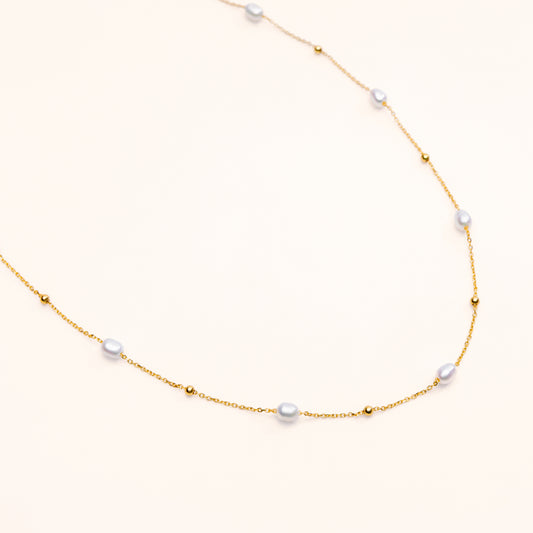
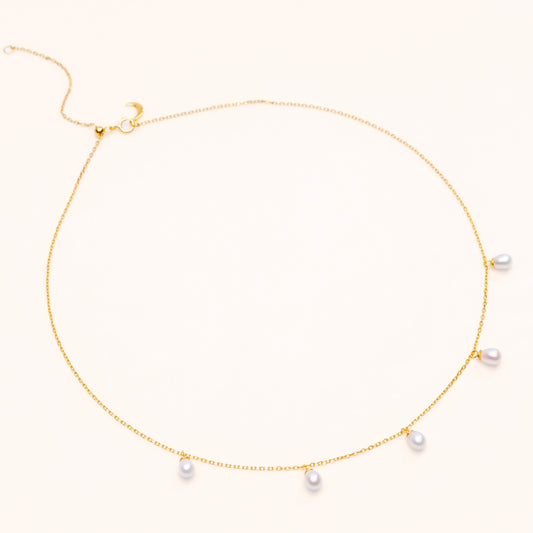
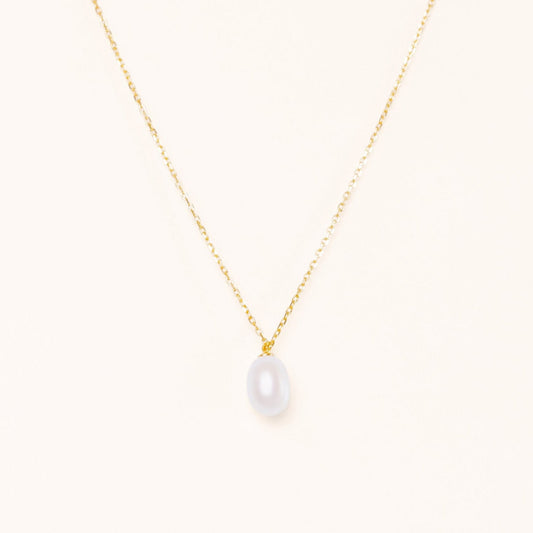
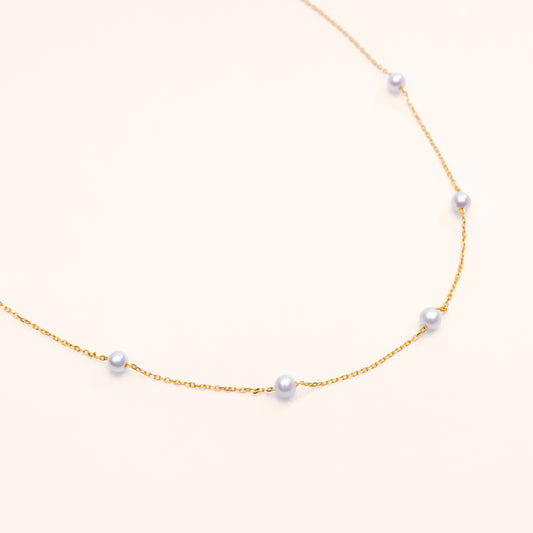
Every Pearl Luna piece is 925 sterling silver, finished in either its natural silver or 18k gold plating, set with real freshwater pearls and lab-grown gemstones. There is no brass anywhere in the range and no nickel plating layer, so the metal that eventually meets your skin, even after years of wear, is silver. Our workshop has spent 70 years working with pearls in Kobe, Japan, and the settings are built to the same standard as the pearls.
Most of the range, including everyday pearl bracelets and pearl earrings, sits under $100, and you can browse the full under-$100 collection if you are replacing a brass piece that has started to mark. Shipping is free, and every order carries a 30-day return window in case a piece does not suit you.
Frequently asked questions
Does sterling silver turn your skin green?
Rarely. Sterling silver is 92.5% silver and 7.5% other metals, usually copper, which is too little to stain most people. What sterling silver does do is tarnish, forming a dark surface layer that can occasionally rub off grey in very humid conditions. A quick polish removes it, and gold plating over sterling prevents it almost entirely.
Does gold-plated jewelry turn your skin green?
Only if the metal underneath the plating is brass or another copper alloy. Plating itself does not stain, but it wears thin over time and exposes the base. Gold plating over sterling silver stays clean on skin even as it wears, because the base is silver. Always check what a plated piece is made of before buying.
Is green skin from jewelry harmful?
No. The green mark is copper salts sitting on the surface of the skin, and it washes off with soap and water. It is not an infection, poisoning, or allergic reaction. If the area is also red, itchy, or bumpy and does not clear when the jewelry is removed, that is a separate nickel allergy and worth switching metals for.
Why does my ring only turn my finger green sometimes?
Because the reaction needs moisture and acidity, which vary day to day. Heat, sweat, humidity, lotion, sunscreen, and hand sanitizer all speed it up, so the same ring may be fine in dry winter weather and leave a mark after one warm, active day. The metal has not changed; your skin's environment has.
How do I know if my jewelry is brass?
Look for a metal stamp first: genuine sterling silver is marked 925, and solid gold carries a karat mark like 10k, 14k, or 18k. Brass is usually unmarked or labeled "gold tone." Brass also feels lighter than silver, warms quickly in the hand, and, when plating wears at edges, shows a yellow-orange metal rather than white silver underneath.