
Freshwater vs. Akoya Pearls: Which Should You Buy? Luster, Durability, and Price Compared
If you want pearls you can wear every day without worry, choose freshwater. If you want the classic, mirror-bright white strand for formal occasions and you are comfortable paying more for it, choose akoya. That is the short answer. The longer one comes down to five things you can actually see and feel: how the pearl is grown, its luster, its durability, its color and shape, and its price.
We have worked with pearls in Kobe, Japan, for 70 years, and Kobe is the historic heart of the Japanese akoya trade. We love akoya. We still build our own jewelry around freshwater pearls, and the reasons below explain why that is the right choice for most modern wardrobes.

Freshwater vs. akoya pearls at a glance
- Where they grow: Freshwater pearls grow in mussels in lakes and ponds, mostly in China. Akoya pearls grow in small saltwater oysters, mainly in Japan, with some production in China and Vietnam.
- Nacre: Most freshwater pearls are solid nacre all the way through. Akoya pearls are a layer of nacre over a round shell bead.
- Luster: Akoya has a sharp, mirror-like shine. Freshwater has a softer, satiny glow, and top grades come close to akoya.
- Size: Akoya typically runs about 2–10mm, most often 6–8mm. Freshwater spans a wider range, and large sizes are far more affordable.
- Color: Akoya is white or cream with rose or silver overtones. Freshwater comes in natural white, pink, peach, and lavender.
- Price: For a similar size and look, freshwater usually costs a fraction of akoya.
How each pearl is grown (and why it matters)
The biggest practical difference between freshwater and akoya pearls is what is inside them. To culture an akoya pearl, a technician places a polished shell bead and a small piece of mantle tissue inside the oyster, which then coats the bead in nacre, usually for around one to two years. Each oyster produces only one or two pearls at a time, which is part of why akoya costs more.
Freshwater mussels are typically nucleated with tissue alone, and a single mussel can grow dozens of pearls at once. With no bead in the center, the mussel builds the pearl entirely from nacre. That solid construction is the source of freshwater's best qualities: durability and value.
Luster: which pearl shines more?
Akoya pearls generally have the sharper luster. Their tightly layered nacre and very round shape produce crisp, mirror-like reflections, which is why a fine akoya strand reads so polished across a room. Freshwater luster tends to be softer and more diffused, a glow rather than a gleam. High-grade freshwater pearls narrow that gap considerably, and many people prefer the gentler look against skin in daylight.
To judge luster on any pearl, look for a clear reflection of a light source on its surface. Sharp edges on that reflection mean strong luster; a blurry, chalky reflection means weak luster. Our guide to judging pearl quality walks through the full checklist.
Durability: which pearl lasts longer?
Freshwater pearls are usually the more durable choice for daily wear because they are solid nacre. There is no bead underneath for years of wear to expose, and small nicks do not reveal a different material inside. Akoya nacre over a bead can wear thin at the drill hole or on high-contact surfaces over time, especially on rings and bracelets.
Both types are organic gems and relatively soft, so the same care rules apply: put pearls on after perfume and lotion, wipe them with a soft cloth after wearing, and store them away from harder jewelry that can scratch them.
Color and shape: where freshwater has more range
Akoya pearls are prized for consistency: very round, closely matched, white to cream with rose or silver overtones. Many are bleached and color-treated to achieve that uniform look, and dark "black akoya" pearls are dyed.
Freshwater pearls offer more variety. They come in natural pastel colors, including pink, peach, and lavender, and in shapes from round to near-round, drop, button, and baroque. Perfectly round freshwater pearls are rarer and command higher grades, but the wider range of shapes is what makes freshwater ideal for modern pendants, drops, and asymmetric designs.
Price: how much more does akoya cost?
Akoya pearls typically cost several times more than freshwater pearls of a similar size and appearance, and the gap widens quickly above 8mm, where large akoya become scarce. Freshwater lets you buy a larger, cleaner pearl, set in quality metal, for the same budget. For real-world price ranges and what drives them, see how much real pearls cost.
Which should you buy? A quick decision guide
Choose freshwater pearls if you want:
- Everyday earrings and necklaces you will wear to work, on weekends, and while traveling
- The best value, or a first pearl piece
- Natural pastel colors or modern shapes like drops and baroques
- A gift that will be worn often rather than saved for special occasions
Choose akoya pearls if you want:
- A traditional, perfectly matched white strand for black-tie events or a wedding
- The sharpest possible luster in small, very round pearls
- A formal heirloom piece, and you are prepared to pay for it
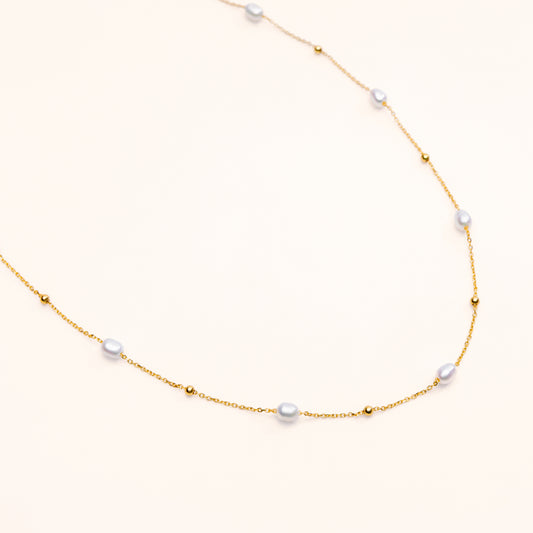
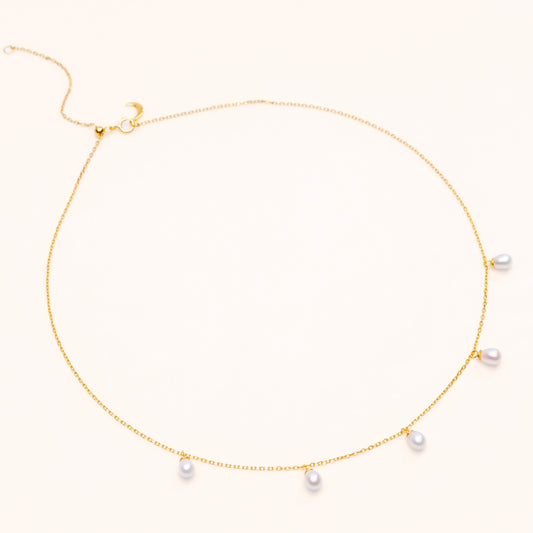
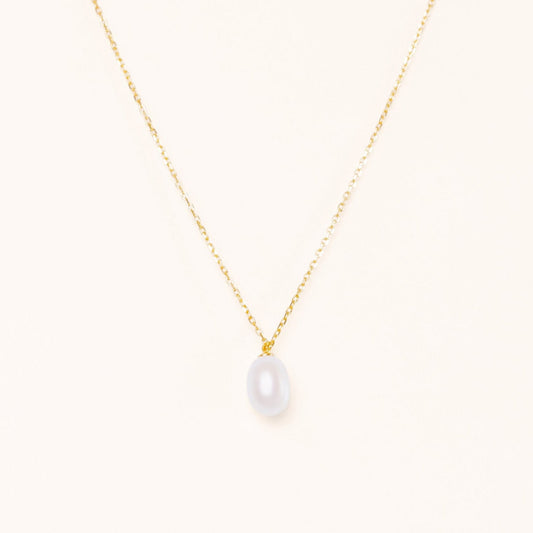
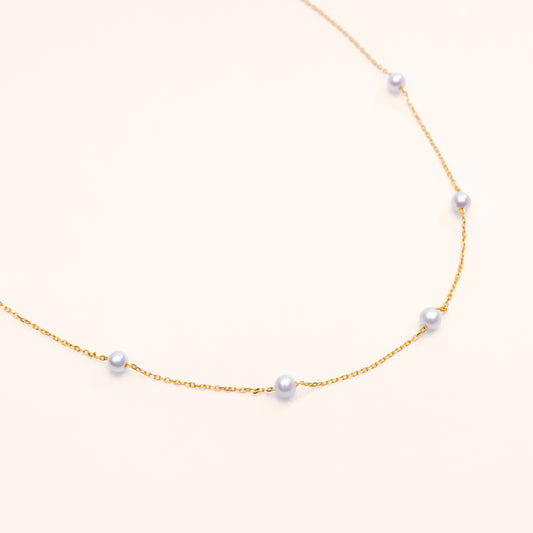
For most people building an everyday collection, freshwater delivers the look they want with fewer compromises. It is why every piece in our pearl jewelry collection uses real freshwater pearls set in 925 sterling silver with 18k gold plating, never brass, and all of it is hypoallergenic and nickel-free. Start with pearl earrings for an easy daily piece, or browse pearl necklaces for pendants and chains that layer well.
Frequently asked questions
Are freshwater pearls real pearls?
Yes. Freshwater pearls are real cultured pearls grown by living mussels, the same way akoya pearls are grown by oysters. "Cultured" means a person started the process; the mussel creates all the nacre. They are not imitation pearls, which are glass or plastic beads coated to look pearly and have no nacre at all.
Can you tell freshwater and akoya pearls apart by looking?
Sometimes. Akoya tend to be very round with sharp, mirror-like luster, and rarely exceed 10mm. Natural pastel colors, softer luster, or large white pearls at a modest price usually point to freshwater. A jeweler can confirm by examining the drill hole under magnification, where a bead nucleus shows as a visible boundary.
Are akoya pearls worth the extra money?
Akoya pearls are worth it if you specifically want a classic, tightly matched white strand with sharp luster for formal wear. For everyday jewelry, most people get better value from high-quality freshwater pearls, which are more durable, come in more colors and shapes, and allow a larger pearl or better setting for the same budget.
Do freshwater pearls lose their luster over time?
Not with basic care. Because most freshwater pearls are solid nacre, there is no bead underneath to show through as they age. Luster dulls mainly from contact with perfume, hairspray, lotion, and sweat. Put pearls on last, wipe them after wear, and store them separately, and they will keep their glow for decades.
Which pearls are better for everyday wear?
Freshwater pearls are generally better for everyday wear. Their solid-nacre construction resists wear, they are less costly to replace if lost, and their softer luster suits daytime and casual outfits. Pair them with hypoallergenic 925 sterling silver settings for comfortable all-day wear, even for sensitive skin.