
How to Choose a Pearl Bracelet: Style, Pearl Size, Clasp, and Metal Explained
Share
The right pearl bracelet comes down to five decisions: the style (single pearl, bead strand, station, charm, or bar), the pearl size, the clasp, the metal, and how it will live alongside the rest of your wrist. Get those five right and you'll reach for it daily instead of leaving it in the drawer. This guide walks through each one in order, with the measurements and trade-offs we use when helping customers choose.
Pearl bracelet styles explained: which one suits you
A single-pearl bracelet is the most versatile choice for everyday wear; a bead or full-pearl strand is the most classic; station and bar bracelets sit in between; and gem-charm bracelets are for people who want a little color and movement. Here is how each one actually behaves on the wrist.
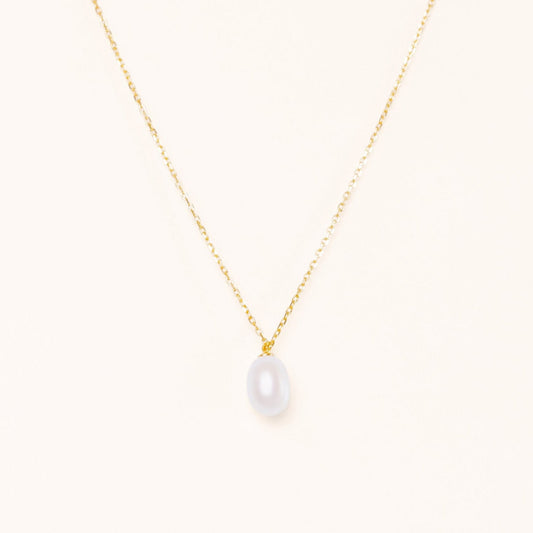
Single-pearl (solo) bracelet
One pearl on a fine chain. It disappears under a sleeve, layers with anything, and is the safest gift because there's no style commitment. Ours uses a 7.5–8mm freshwater pearl, which is large enough to read as a pearl from across a table but small enough not to catch on knitwear. If you're buying your first pearl bracelet, start here.
Bead or pearl-and-bead strand
Pearls alternating with small metal beads along the chain. This reads as the "pearl bracelet" most people picture, but with far more flexibility than a fully strung strand: it drapes rather than sitting stiffly, and the beads add a warm gold glint on skin. It's the best option for someone who wants the bracelet to be noticed.
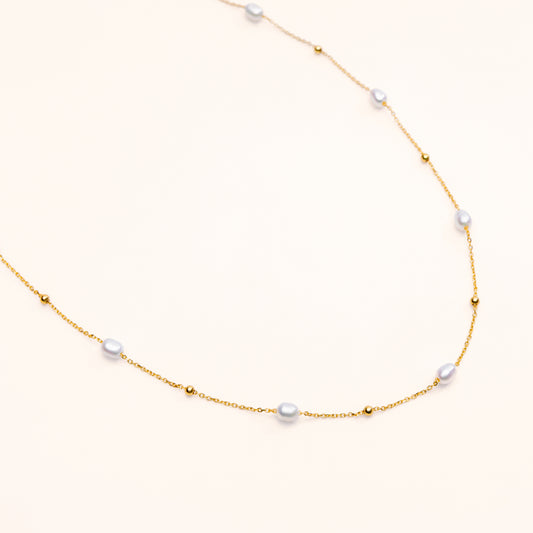
Station bracelet
Pearls spaced evenly along the chain with visible gaps of chain between them. Station styles look modern and pair well with a watch or a second bracelet because the negative space keeps a stack from looking crowded. If you already wear a watch daily, this is the style to buy.
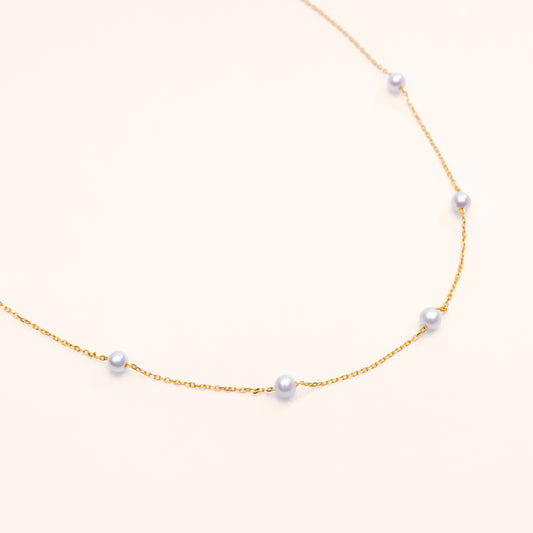
Bar bracelet
Slim metal bars alternating with small pearls (3–3.5mm in ours). It's the most architectural of the group, sits flat, and suits people who prefer clean lines over softness. It works especially well in a workplace setting or with tailored clothing.
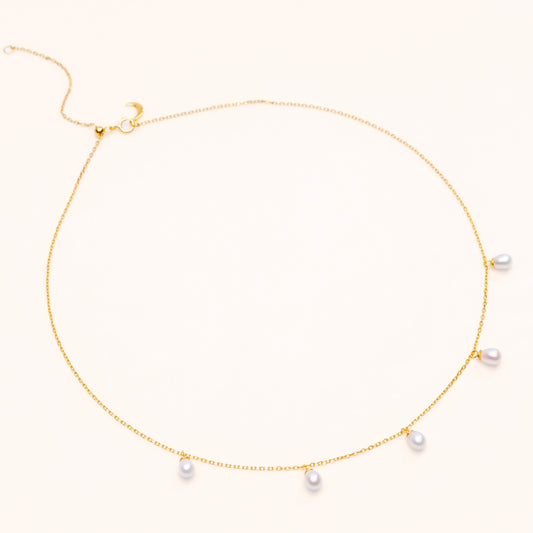
Pearl and gemstone charm bracelet
Small pearls interspersed with tiny dangling stones, such as lab-grown ruby, sapphire, or emerald. Charm styles move as you gesture and catch light, so they suit evenings and celebrations more than a keyboard-heavy day. They're also a good way to add a birthstone (ruby for July, sapphire for September, emerald for May) without buying a full colored-stone piece. Browse the ruby, sapphire, and emerald collections to compare.
What pearl size looks best on a bracelet?
For bracelets, 3–5.5mm pearls suit everyday and stacked wear, while a single 7–8mm pearl is the sweet spot for a solo style. Wrists are smaller than necks, so pearl sizes that look modest on a necklace can look oversized on the wrist. A useful rule: the more pearls on the bracelet, the smaller each one should be. A bead strand at 5–5.5mm reads elegant; the same strand at 8mm reads heavy. Conversely, a single pearl below 6mm can look like an afterthought.
If you're deciding between two sizes, choose the smaller one for daily wear and the larger one for a piece you'll wear on its own. For a deeper look at how pearl millimeters translate on the body, see our pearl size guide.
Which bracelet clasp is best for everyday wear?
A sliding (adjustable) clasp is the most practical choice for a pearl bracelet because it removes the guesswork of sizing and lets you tighten or loosen the fit depending on the day. Lobster clasps are secure but require you to know your exact wrist size and can be fiddly to fasten one-handed. Toggle clasps look decorative but are the easiest to lose. Elastic-strung pearl bracelets have no clasp at all, which is convenient, but the elastic stretches and eventually snaps, usually at the worst moment.
Every bracelet we make uses a sliding clasp on a chain that adjusts to a maximum of 7.5 inches (19cm), which covers the vast majority of adult wrists. If you're unsure of your size, our bracelet size guide shows how to measure with a strip of paper in under a minute.
Gold or silver pearl bracelet: how to choose the metal
Choose the metal you already wear most on your hands, because a bracelet sits next to rings and watches all day and the mismatch will be visible. Gold-plated sterling silver warms up white freshwater pearls and suits olive, warm, and deep skin tones particularly well; plain sterling silver gives a cooler, crisper look that flatters pink undertones. If you wear both metals, a pearl bracelet is actually a good bridging piece, since the pearl itself is neutral.
What matters more than the color is what's underneath the plating. Our bracelets are 925 sterling silver with 18k gold plating, never brass, and are nickel-free and hypoallergenic, so they're safe for the sensitive skin on the inside of the wrist. If you've had bracelets leave marks before, read why jewelry turns skin green before buying again.
Can you wear a pearl bracelet every day?
Yes, provided you follow two habits: put it on last (after lotion, perfume, and hand sanitizer have dried) and take it off before washing dishes, exercising, or sleeping. Freshwater pearls are softer than gemstones, and the wrist takes more knocks than the neck or ears, so a bracelet needs a little more care than a pendant does. Wipe it with a soft cloth after wearing and store it flat or hung so the chain doesn't tangle.
Realistically, a solo or station bracelet worn this way will look good for years. A charm bracelet with dangling stones sees more contact with desks and sleeves, so it's better rotated in for occasions than worn seven days a week.
How to build a pearl bracelet stack
Start with one pearl bracelet and one plain element (a slim gold chain, a bead bracelet, or your watch), then add a third piece only if it's visibly different in texture from the first two. The pearl bracelet should be the softest, roundest element; the other pieces should be flatter or more linear so the pearls stand out. Two pearl bracelets together works when their pearl sizes differ, such as a 5mm bead strand alongside a single 8mm pearl.
Keep the whole stack to one metal, or use a pearl-and-gold piece to bridge silver and gold. We covered spacing and combinations in detail in our bracelet stacking guide.
How much should a good pearl bracelet cost?
A well-made freshwater pearl bracelet in sterling silver with real gold plating typically costs between $40 and $200; anything much cheaper is almost certainly brass or plastic pearls, and anything much more expensive is usually paying for a brand name or solid gold rather than better pearls. In our own range, the bracelets under $50 are simple bead and chain styles, the solo and bead-strand pearl bracelets sit under $100, and station, bar, and gem-charm designs run $140–$185. The whole bracelet collection ships free and can be returned within 30 days if the style isn't right on your wrist.
A quick pearl bracelet buying checklist
Before you order, confirm the following: the pearls are described as freshwater or cultured (not "pearl-look" or "faux"); the base metal is stated as 925 sterling silver, not just "gold" or "gold-tone"; the clasp is adjustable or the stated length fits your measured wrist plus about half an inch of ease; the pearl size is listed in millimeters; and the return window is long enough to try it on properly. If any of those are missing from a listing, treat it as a red flag.
Frequently asked questions
What is the most versatile pearl bracelet style?
A single-pearl bracelet on a fine adjustable chain is the most versatile style. It works with a watch, layers with other bracelets, suits both office and evening wear, and fits under sleeves without catching. It's also the safest gift choice because it doesn't commit the wearer to a strong look.
What size pearl is best for a bracelet?
For bracelets with several pearls, 3–5.5mm pearls look balanced on most wrists. For a single-pearl bracelet, a 7–8mm pearl is ideal: large enough to be noticed, small enough to sit flat. Because wrists are narrower than necks, choose bracelet pearls one size smaller than you would for a necklace.
Are freshwater pearl bracelets durable enough for daily wear?
Yes, with basic care. Put the bracelet on after lotion and perfume have dried, remove it for exercise, dishes, and sleep, and wipe it with a soft cloth afterward. Freshwater pearls are softer than gemstones, and wrists take more knocks than ears or necks, so simple styles hold up better than dangling charm designs for everyday use.
What clasp should a pearl bracelet have?
A sliding adjustable clasp is the most practical for a pearl bracelet. It lets you fine-tune the fit daily and removes the need for exact wrist sizing, which matters when buying a gift. Lobster clasps are secure but fixed-length; toggles are easy to lose; elastic strands stretch and eventually break.
Is a pearl bracelet a good gift?
A pearl bracelet is one of the lowest-risk jewelry gifts because an adjustable clasp removes sizing worries and pearls flatter every skin tone. Choose a solo or station style for someone whose taste you don't know well, and a gem-charm bracelet with their birthstone for a more personal touch.