
How to Layer Necklaces: The Spacing Formula That Always Works
The reliable rule for layering necklaces is to leave about two inches between each strand. That single gap is what separates a deliberate stack from a knotted mess, and it works whether you're wearing two chains or four. Everything else — metals, pendants, pearls — is a matter of taste. Below is how to build a layered look that sits properly, holds its shape through a full day, and doesn't require re-adjusting every twenty minutes.
The 2-inch spacing rule for layering necklaces
Give each necklace in a stack roughly two inches of length difference from the one above it. Standard lengths make this easy: a 16-inch choker, an 18-inch princess, and a 20-inch matinee already sit at perfect intervals. Two inches is enough for each piece to read as its own line rather than crowding the one above, and it's the point at which chains stop rubbing against each other and tangling.
Under about 1.5 inches of separation, layers visually merge and physically twist. Over about three inches, the stack loses cohesion and starts looking like unrelated necklaces worn at the same time. If you're unsure of your own lengths, our pearl necklace length guide walks through where each standard length falls on the body.
How many necklaces should you layer?
Two or three. Two is the everyday number — it reads as intentional without asking for attention. Three is the styling sweet spot for evenings, photos, and open necklines, because an odd number gives the eye a clear focal point in the middle. Four is possible but requires very fine chains and near-identical weights, or the bottom strand drags the whole arrangement forward.
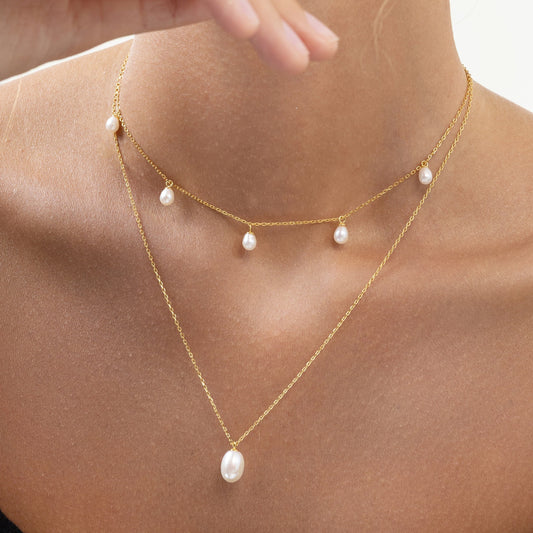
A dependable structure for three: a short plain chain or pearl choker at the collarbone, a pendant at 18 inches, and a longer chain at 20 to 22 inches. The pendant lands in the visual center, which is where you want the interest.
Mixing pearls with chains
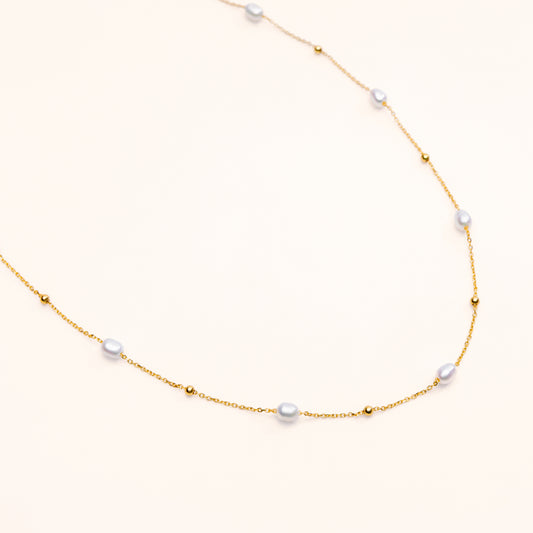
Pearls layer beautifully because they add texture without adding a second color story. A beaded freshwater pearl strand paired with a plain gold chain gives you contrast in surface — matte, round luster against a flat polished line — while staying tonally quiet.
A few pairings that work consistently:
- Pearl strand + fine chain. Put the pearls on top if they're small, underneath if they're 8mm or larger, so the heavier piece anchors the stack.
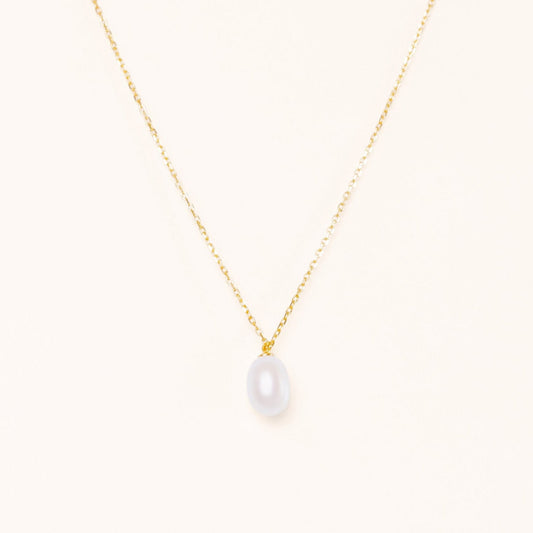
- Pearl pendant + longer plain chain. The simplest two-piece layer there is, and the one most likely to survive a workday untouched.
- Two pearl strands of different sizes. Vary the pearl diameter noticeably — 5mm over 9mm, not 7mm over 8mm — or the two strands look like a mistake.
You can browse the full range in pearl necklaces, and most layering-friendly chains sit in jewelry under $100.

Can you mix gold and silver when layering?
Yes — mixed metals have been standard styling for years, and the trick is repetition rather than restraint. Wear at least two pieces in each metal, or include one piece that already combines both, so the mix looks like a decision instead of an accident. Many of our pieces pair 925 sterling silver with 18k gold plating in a single design, which does that work for you.
If mixed metals still feel unfamiliar, keep the layers matched and let the pendant shapes create the variety instead. Our guide to coordinating earrings, necklaces, and bracelets covers how far to take matching across a full look.
Layering by neckline
Match the shape of your stack to the shape of the opening. A V-neck takes layers that echo the V — shortest at the collarbone, longest ending above the point. A crew neck works best with everything worn over the fabric, starting at 18 inches so the top layer clears the ribbing. A button-down looks best with two layers only, both short enough to sit in the open collar. A strapless or square neckline wants a single short choker plus one longer piece, with nothing landing directly on the fabric edge.
How to stop layered necklaces from tangling
Tangling is usually a weight problem, not a spacing problem. Chains of very different weights swing at different rates and wrap around each other. Keep your layers within a similar gauge, and put the heaviest piece on the longest chain so it acts as an anchor.
Three practical fixes:
- Stagger the clasps. Rotate each necklace so the clasps sit at different points around the back of your neck rather than stacking together.
- Put the finest chain on top. Lighter pieces higher, heavier pieces lower, always.
- Store them separately. Most tangles are made in the jewelry box, not on the body — see how to store jewelry for the fastenings-and-hooks method.
Building a layering set you'll actually wear
Start with three pieces and stop: one fine 16-inch chain, one 18-inch pendant, one 20-inch pearl strand. That combination covers work, weekends, and most evenings, and each piece still stands alone. Add a fourth only when you know exactly what it's doing in the stack.
For pieces that hold up to daily layering, look for real materials — 925 sterling silver, 18k gold plating, real freshwater pearls — rather than brass bases that wear through at the contact points where layers rub. Everything we make is nickel-free and hypoallergenic, built on seventy years of working with pearls in Kobe, Japan. Browse the full range of necklaces to build your set.
Frequently asked questions
How much space should be between layered necklaces?
About two inches between each necklace. Standard jewelry lengths make this simple: 16, 18, and 20 inches layer perfectly with no adjustment. Less than 1.5 inches of separation causes chains to tangle and visually merge together. More than three inches makes the layers look unrelated rather than like a single intentional stack.
Can you layer pearl necklaces with gold chains?
Yes, and it's one of the easiest layering combinations. Pearls add texture without introducing a competing color, so they sit comfortably against gold or silver chains. Place smaller pearls above a plain chain and larger pearls, 8mm and up, below it so the heavier strand anchors the stack.
How many necklaces is too many to layer?
Four is generally the practical limit, and only with very fine chains of similar weight. Two layers read as everyday and polished; three gives you a clear focal point in the middle and works well for evenings. Beyond four, the lower strands pull the arrangement forward and tangling becomes constant.
Is it okay to mix gold and silver necklaces?
Yes. Mixed metals look intentional when the mix repeats — wear at least two pieces in each metal, or include one design that already combines both. Pieces made in sterling silver with 18k gold plating bridge the two naturally, which is why they're the easiest starting point for mixing.
How do I keep layered necklaces from tangling all day?
Match chain weights within your stack, put the finest chain on top and the heaviest on the longest length, and rotate the clasps so they sit at different points around the back of your neck. Storing each necklace separately, clasped and hung, prevents most tangles before you ever put them on.