
How to Store Jewelry So It Doesn't Tangle, Tarnish, or Scratch
The single most useful rule for storing jewelry: give every piece its own soft, dry, separate space. Almost every storage problem — knotted chains, dull silver, hairline scratches on a pearl — comes from pieces touching each other, sitting in damp air, or being crushed together in a drawer. Fix those three things and jewelry you bought this year will still look new in five.
Here's how to do it properly, material by material.
What actually damages jewelry in storage
Three forces do nearly all the damage: friction, chemistry, and pressure. Friction is metal and stone rubbing together, which scratches softer surfaces and wears through plating. Chemistry is airborne moisture and sulfur compounds reacting with silver to form tarnish. Pressure is the weight of a pile, which bends thin chains and drives clasps into softer materials.
Knowing which force threatens which material is what makes storage advice actually useful. Pearls are vulnerable to friction and dryness. Sterling silver is vulnerable to chemistry. Gold plating is vulnerable to friction. Fine chains are vulnerable to pressure and motion.
How to store necklaces so they don't tangle
Necklaces tangle because a loose chain moves inside a container, and a moving chain works its way through its own loops. The fix is to stop the movement, not to coil more carefully. Hang necklaces individually on hooks or a stand, or lay each one flat in its own compartment with the clasp fastened. A fastened clasp turns an open chain into a closed loop, which cannot thread through itself.
For travel or drawer storage, thread the chain through a drinking straw or a short length of soft tubing before fastening the clasp. It sounds improvised, but it is the most reliable low-cost method there is. If you tend to wear several chains at once, keep the set you actually layer together in adjacent slots so you are not untangling three at a time each morning.

How to store pearl jewelry
Store pearls in a soft, breathable pouch or a fabric-lined compartment, kept away from other jewelry — and never sealed airtight for long stretches. Pearls are organic. Their nacre contains a small amount of moisture, and a permanently sealed plastic bag or a hot, bone-dry drawer can eventually dry it out and cause fine surface crazing.
Pearls are also soft. On the Mohs scale they sit around 2.5 to 4, which puts them below almost every gemstone and metal they might share a drawer with. A lab-grown sapphire ring resting against a pearl pendant will win that contact every time. Give pearls their own pouch, and keep them out of direct sunlight and away from radiators and windowsills.
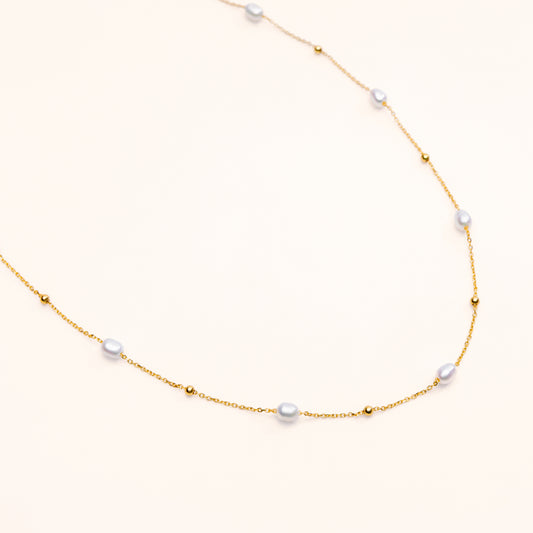
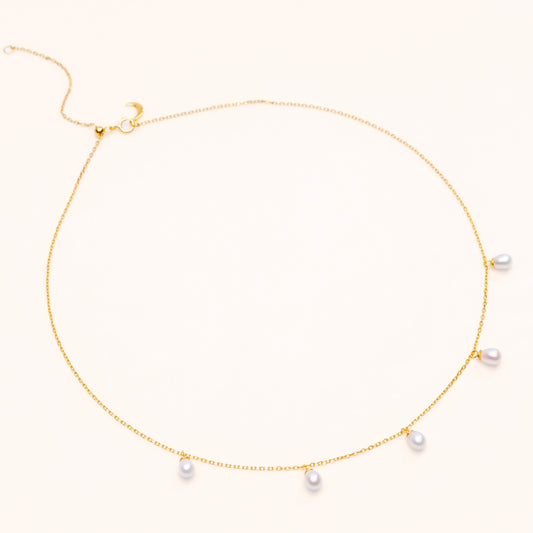
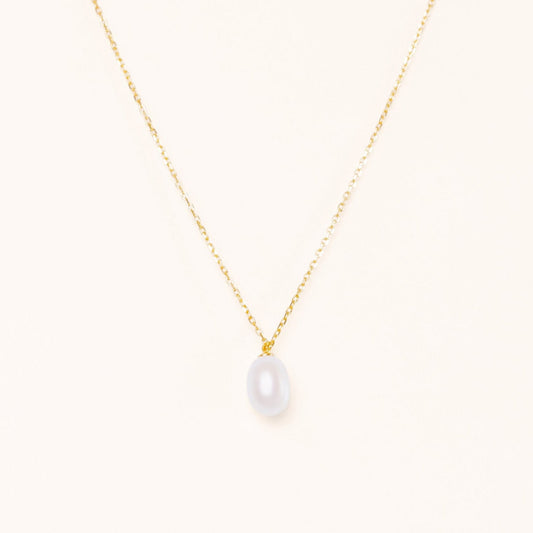
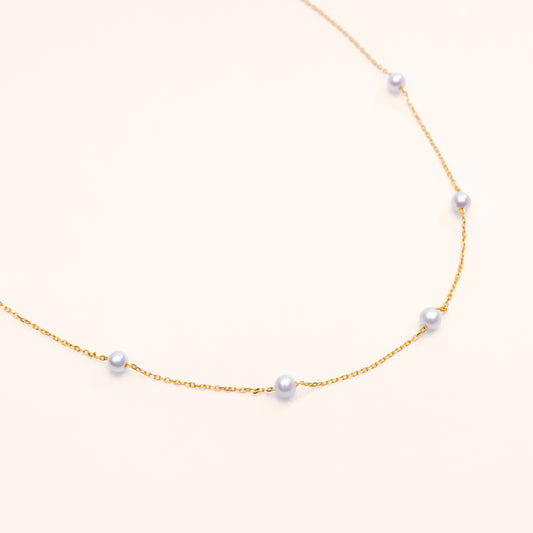
One more habit worth building: pearls should be the last thing you put on and the first thing you take off. Perfume, hairspray, and lotion are far harder on nacre than anything that happens in a drawer. Wipe each piece with a soft dry cloth before it goes away for the night — that thirty-second step does more for a pearl than any storage container. Our full freshwater pearl care guide covers cleaning in more depth, and you can see the full range in freshwater pearl jewelry.
How to store sterling silver so it doesn't tarnish
Sterling silver tarnishes when it reacts with sulfur compounds in the air, and humidity speeds that reaction up. So the goal with silver is the opposite of pearls: limit air exposure and keep it dry. An anti-tarnish strip in a closed jewelry box, or a small zip bag with the air pressed out, will keep silver bright for months.
Some common storage materials make tarnish worse because they contain sulfur themselves. Avoid storing silver in contact with rubber bands, wool, untreated cardboard, or newspaper. And keep it out of the bathroom entirely — a room that swings between steam and dry several times a day is the worst environment in the house for silver.
Every piece at Pearl Luna is built on 925 sterling silver, so this applies across the range, whether you are storing earrings or a stack of bracelets.
How to store gold-plated jewelry
Gold plating is a thin surface layer, so the enemy is abrasion rather than air. Store gold-plated pieces so they cannot rub against each other or against harder stones. Individual pouches, lined compartments, or a tray with fabric dividers all work. What does not work is a shared dish on a dresser, where every piece slides across every other piece each time you reach in.
Our plating is 18k gold over sterling silver at a USFTC-compliant thickness, and it is nickel-free, so there is no brass underneath to expose. But no plating is immune to being sanded down by its neighbours — separation is the whole strategy.
How to store earrings and rings
Earrings should be stored as pairs, fastened, in a compartment small enough that they cannot migrate. A simple earring card, a lidded box with foam inserts, or a shallow tray with dividers all prevent the classic problem of losing one half of a pair to the back of a drawer. Always keep the backs on: they stop the post from scratching whatever it lands next to.
Rings do best in a slotted ring roll or individual compartments. Rings set with lab-grown gems are the hardest things in most jewelry boxes — lab-grown sapphire and ruby rate 9 on the Mohs scale, lab-grown diamond 10 — which means they will scratch nearly anything they touch, including softer gold surfaces and pearls. Store them apart from everything else.
Where not to store jewelry
Do not store jewelry in the bathroom, in a car, or on a sunny windowsill. Bathrooms cycle through heat and humidity daily, which accelerates tarnish and is hard on pearls. Cars swing to extremes in both directions. Direct sunlight and heat can dry out nacre and fade the colour of some organic materials over time.
The ideal spot is boring: a drawer or closet shelf in a room that stays at a steady, moderate temperature, in a lined box that closes. If you are packing for a trip, the rules shift slightly — our guide to travelling with pearl jewelry covers what changes.
A five-minute weekly reset
Once a week, do a short pass over everything you have worn. Wipe each piece with a soft dry cloth to remove skin oils and product residue. Fasten every clasp. Check that earring backs are still snug and that no chain has slipped out of its slot. Return anything sitting on the dresser to its actual compartment.
This is the habit that separates jewelry that ages well from jewelry that quietly degrades. It costs five minutes and it prevents nearly every problem in this article. If you are building a collection you will actually wear daily, our jewelry under $100 is designed for exactly that kind of rotation.
Frequently asked questions
Should I store pearls in a plastic bag?
Not for long periods. Pearls are organic and contain a small amount of moisture, so a sealed airtight bag can gradually dry the nacre and cause fine surface cracking. Use a soft, breathable pouch or a fabric-lined compartment instead. Short-term use during travel is fine, but do not make it permanent storage.
How do I stop sterling silver from tarnishing in storage?
Keep it dry and limit air exposure. Store sterling silver in a closed box with an anti-tarnish strip, or in a zip bag with the air pressed out. Avoid contact with rubber bands, wool, and untreated cardboard, which contain sulfur, and never store silver in a bathroom where humidity fluctuates daily.
Why do my necklaces keep tangling even when I store them carefully?
Because the chain is still able to move. A loose chain in a box shifts every time the drawer opens and works through its own loops. Fasten the clasp before storing, which turns the chain into a closed loop that cannot thread through itself, and hang or slot each necklace separately.
Can I store all my jewelry together in one box?
Only if the box has separate lined compartments. The problem is not the box, it is contact. Pearls rate around 2.5 to 4 on the Mohs scale while lab-grown sapphire rates 9 and lab-grown diamond rates 10, so harder pieces will scratch softer ones wherever they touch. Divide, and it works fine.
Does gold-plated jewelry need special storage?
Yes — keep it from rubbing against other pieces. Plating is a thin surface layer, so abrasion is what wears it down, not air. Store gold-plated pieces in individual pouches or lined compartments rather than a shared dish where they slide against harder stones and metals every time you reach in.