
Can You Mix Gold and Silver Jewelry? The 70/30 Rule That Makes It Look Intentional
Share
Yes, you can mix gold and silver jewelry, and done with a little intention it looks more considered than a matched set. The rule most stylists work by is simple: pick one metal to lead, let the other play a supporting role, and repeat each metal at least twice so the mix reads as deliberate rather than accidental. Below is the practical version of that rule, piece by piece, along with the mistakes that make mixed metals look messy.
The 70/30 rule for mixing gold and silver jewelry
Choose a dominant metal for roughly 70 percent of what you're wearing and use the second metal as an accent for the remaining 30 percent. If you're wearing five pieces, that's three or four in your lead metal and one or two in the other. An even 50/50 split is the hardest look to pull off because the eye can't find a hierarchy, so it reads as two separate outfits' worth of jewelry.
A practical way to pick the lead: start with whichever metal you already own more of, or the one that flatters your skin tone (our guide on choosing gold or silver for your skin tone walks through that). Then add the second metal in small doses.
Repeat each metal at least twice
One silver ring in an otherwise all-gold look tends to look like you forgot to take it off. Two silver pieces, say a ring and a slim bracelet, look like a choice. Repetition is what turns a stray piece into a pattern, and it's the single most useful trick in this whole guide. If you only want to add one accent piece, choose one that already contains both metals so the bridge is built in.
Use a two-tone piece as the bridge
A single piece that combines gold and silver gives every other piece permission to be either. Two-tone pieces make mixing effortless because the eye sees both metals together in one spot and accepts them everywhere else. Look for a pendant with a silver setting on a gold chain, a bracelet with alternating beads, or earrings with a silver post and a gold drop. Wear the bridge piece near the center of the look, usually at the neckline, so it's the first thing people register.
Pearls are the easiest way to mix metals
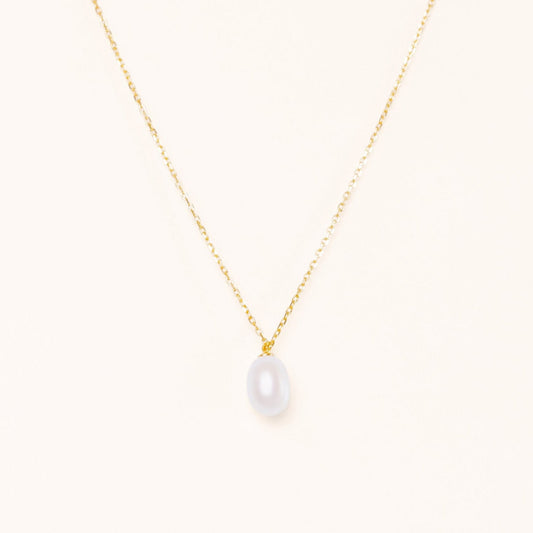
Freshwater pearls are metal-neutral, which is why a pearl piece can sit between gold and silver without taking sides. White and cream pearls carry warm and cool light at the same time, so a pearl pendant on a gold chain will still look right next to silver hoops. This is the reason so many stylists reach for pearl jewelry when they want a mixed-metal look to feel calm rather than busy. Softer pearl colors help too: pink and peach pearls lean toward gold, while lavender and silver-grey pearls lean toward silver, so you can use pearl color to nudge the balance in whichever direction you want.
Lab-grown gemstones behave similarly. A sapphire or emerald accent stone reads as color, not metal, and gives the eye a third thing to look at besides gold-versus-silver.
How to mix metals by piece
Necklaces
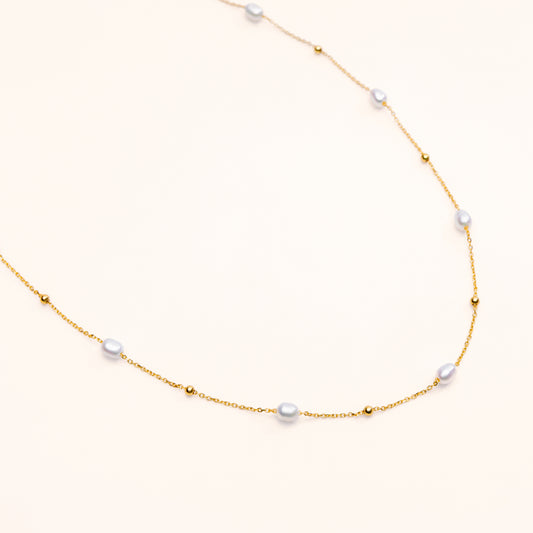
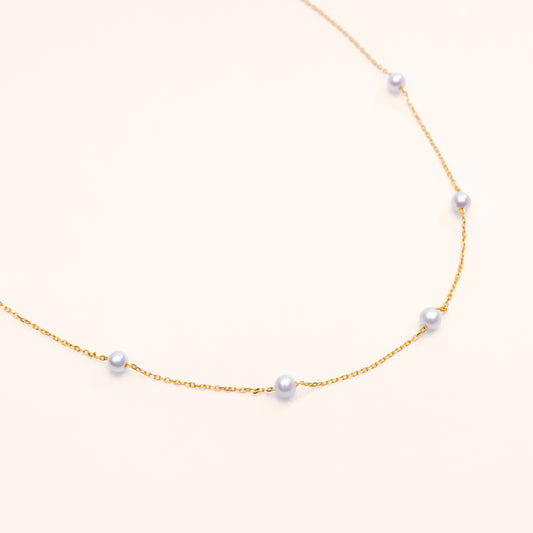
Layering is the most natural place to mix metals, but keep the layers in the same metal family for the first two strands and introduce the second metal on the third. Space them out so each chain is clearly visible; our necklace spacing formula explains the gaps that keep layers from tangling. A pearl station necklace or single pearl pendant is a good middle layer because it neutralizes the transition between a gold chain above and a silver chain below. Browse necklaces with this in mind: one lead-metal chain, one pearl piece, one accent-metal chain.
Earrings
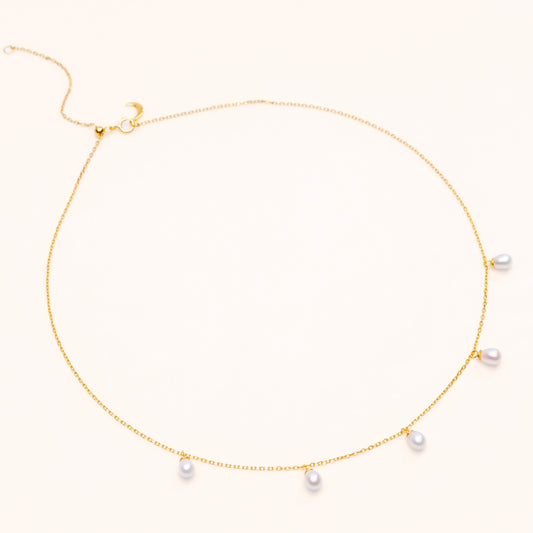
Keep earrings in a single metal unless they're two-tone by design. Mismatched earrings (one gold, one silver) is a deliberate fashion statement that works on some people and looks like an error on most. If your earrings are your lead metal, let the second metal show up on your hands or wrists instead. Pearl drop earrings are a safe pick here because the pearl, not the metal, is what people notice. See earrings.
Bracelets and rings
Wrists and hands are where mixing is most forgiving. Stack two or three bracelets in your lead metal and add one in the accent metal, or split rings across hands: gold on one hand, silver on the other, so each hand is internally consistent. Rings and bracelets on the same arm should share a metal or be tied together by a pearl or gemstone piece. Our bracelets and rings collections both include pearl and two-tone options that make good bridges.
Watches
A watch counts as a piece of jewelry and is often the biggest metal on your body. Treat it as your lead metal and build around it. A two-tone watch is the ultimate bridge piece; if you have one, everything else is easy.
Match finishes, not just colors
Finish matters as much as color. Two polished, shiny pieces in different metals mix more cleanly than a polished silver piece next to a brushed or matte gold one, because the eye reads the change in texture as a second contrast on top of the color contrast. Keep finishes consistent (all polished, or all matte) and let the metal color be the only variable. The same goes for scale: dainty gold with dainty silver mixes well; dainty gold next to a chunky silver cuff looks accidental.
Why the metal underneath matters
Mixed-metal looks stay wearable only if the pieces hold their color. Gold plating over brass wears through fast and turns a dull, coppery tone that makes the mix look tired. Gold plating over 925 sterling silver keeps its color far longer, and when it eventually softens at the edges it fades toward silver, which still fits inside a mixed-metal look. Everything at Pearl Luna is 925 sterling silver, either polished or finished in 18k gold plating, with real freshwater pearls and lab-grown gems. It's nickel-free and hypoallergenic, so you can stack pieces against each other without a reaction. Most of the range is under $100, which makes it realistic to own both a gold and a silver version of your staples.
Three mixed-metal formulas that always work
The everyday mix: gold huggie earrings, a gold-chain pearl pendant, and a slim silver bracelet with a silver ring. Gold leads, silver repeats twice.
The layered neckline: a short gold chain, a pearl station necklace in the middle, and a longer silver chain below. The pearl layer does the bridging.
The evening mix: silver pearl drop earrings, a silver bracelet, and a gold pendant with a lab-grown sapphire or ruby. Silver leads, the colored stone distracts from the single gold piece.
Common mixed-metal mistakes
The three things that most often make mixed metals look wrong are an even 50/50 split with no lead metal, a single orphan piece in the second metal with nothing repeating it, and mismatched finishes or scales. Fix those and almost any combination of gold and silver looks intentional. And if you're unsure, add a pearl: it almost always resolves the picture.
Frequently asked questions
Is it OK to wear gold and silver jewelry together?
Yes. Mixing gold and silver is widely accepted in modern styling and looks polished when done with a plan. Choose one metal to dominate, repeat the second metal at least twice so it looks intentional, and keep finishes and scale consistent. A pearl or two-tone piece placed near the neckline makes the transition between metals feel seamless.
What is the 70/30 rule for mixing metals?
The 70/30 rule means roughly 70 percent of your jewelry is in one lead metal and 30 percent in a second accent metal. It gives the eye a clear hierarchy, which is what separates a deliberate mixed-metal look from a random one. An even 50/50 split is the hardest balance to make look intentional.
Do pearls go with both gold and silver?
Yes. White and cream freshwater pearls are metal-neutral and pair equally well with gold and silver, which makes them ideal bridge pieces in a mixed-metal look. Warmer pearl tones such as pink and peach lean toward gold, while lavender and grey pearls lean toward silver, so you can use pearl color to fine-tune the balance.
Can you wear a gold necklace with silver earrings?
You can, as long as each metal appears more than once somewhere in the look. Pair the silver earrings with a silver ring or bracelet so they aren't the only silver item, and let the gold necklace lead. Keeping the earrings and necklace similar in scale and finish makes the combination read as a coordinated set rather than a clash.
Does gold-plated jewelry work in a mixed-metal look?
It does if the plating is over sterling silver rather than brass. 18k gold plating over 925 silver holds its color well and fades gracefully toward silver, which still fits a mixed-metal outfit. Gold over brass wears to a coppery tone that clashes with both metals, so check the base metal before you buy.