
How to Tell If Jewelry Is Good Quality: 9 Checks to Make Before You Buy
The fastest way to tell if a piece of jewelry is good quality is to check four things before price: what the base metal is, how thick and how disclosed the plating is, how the stones or pearls are held, and how the clasp closes. Get those right and almost everything else follows. With Black Friday and holiday gifting weeks away, here is the checklist we use ourselves — nine checks you can run on a product page or in your hand in a few minutes.
1. Check the base metal (and look for the 925 stamp)
Good-quality fine-fashion jewelry starts with a precious base metal, most often 925 sterling silver — an alloy that is 92.5% pure silver. Look for a "925" or "Sterling" stamp on the clasp tag, inside a ring band, or on an earring post. Very small pieces sometimes carry no stamp, so the listing should state the metal plainly.
Be wary of vague words: "alloy," "fashion metal," "gold-tone," or "silver-tone" usually mean a base metal such as brass, copper, or zinc with a thin color coat. Those wear through quickly and are the usual reason jewelry turns skin green. Our guide to what 925 sterling silver means goes deeper on stamps and hallmarks.
2. Ask how the gold is applied
Gold-plated, gold vermeil, and gold-filled are not the same, and good sellers tell you which one you are buying. Under the US Federal Trade Commission's Jewelry Guides, "gold vermeil" means gold of at least 10 karats, at least 2.5 microns thick, over sterling silver. "Gold-plated" is the broader term for a layer of gold bonded to another metal — so what sits underneath matters more than the word itself.
The quality signal is disclosure: the karat of the gold (14k or 18k), and the base metal under it. "18k gold plated over 925 sterling silver" tells you far more than "gold finish." For the full breakdown, see gold vermeil vs. gold-plated vs. gold-filled.
3. Look at the finish under good light
A well-made piece has an even color and polish across every surface, including the back. Turn it over near a window and look for:
- Patchy or two-tone areas where plating is thin
- Bubbling, pitting, or flaking around edges
- Rough solder seams where links or bails are joined
- Sharp burrs on earring posts or the inside of a ring
Online, zoom into the product photos. Brands confident in their finishing show close-ups of clasps and backs, not just the front.
4. Test how stones are set
A gemstone should sit level and tight in its setting, with no movement when you gently shake the piece next to your ear. Prongs should be even, rounded at the tips, and grip the stone without snagging fabric. Bezel settings (a metal rim around the stone) should be smooth with no gaps.
Check the gemstone disclosure too. "Lab-grown" or "laboratory-created" ruby, sapphire, emerald, or diamond has the same chemistry as the mined stone. "Simulated" or "faux" means an imitation made of a different material — fine at the right price, but not the same thing.
5. Check how pearls are attached
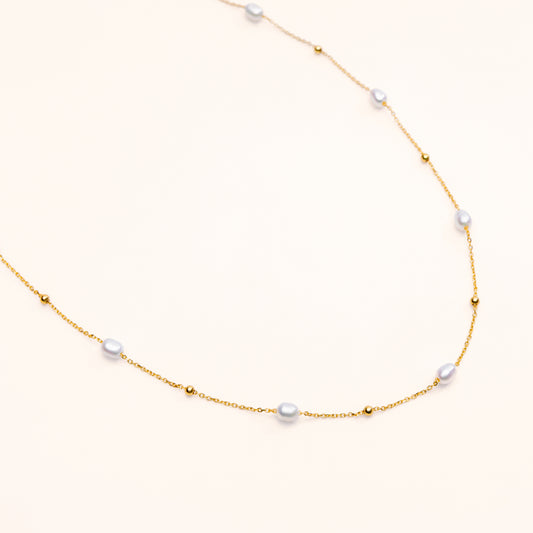
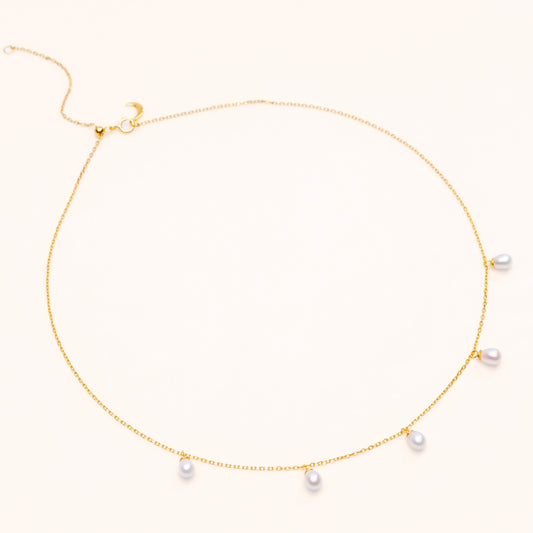
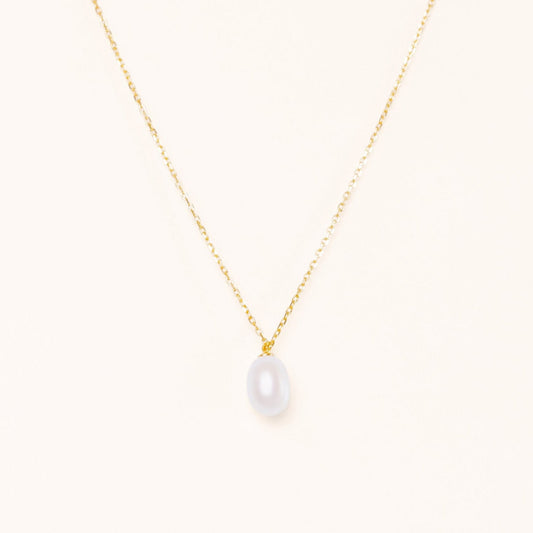
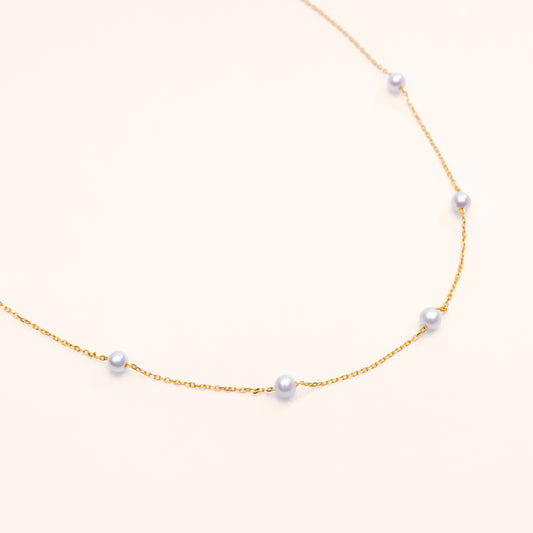
On a pearl strand, quality pieces are knotted between each pearl so they do not rub together and a break does not scatter the whole strand. On pendants, earrings, and chain pieces, the pearl should sit snugly on its post, cap, or wire with no glue visible and no wobble.
The pearl itself should show sharp, bright reflections (luster) and a reasonably clean surface. Our guide to judging pearl quality covers luster, surface, shape, and matching in detail.

6. Work the clasp
A secure clasp is one of the clearest signs of good jewelry. Lobster clasps are the most reliable everyday choice: they spring shut firmly and are easy to open with one hand. Spring-ring clasps work on lighter chains but are fiddlier and weaker over time. Open and close the clasp a few times — it should snap back cleanly, not stick or stay half-open.
Look at the jump rings (the small loops connecting clasp to chain) as well. They should be fully closed with no visible gap a fine chain could slip through.
7. Check the earring posts and backs
Earring posts should be sterling silver, titanium, or another clearly named hypoallergenic metal, and the listing should say "nickel-free" if you have sensitive ears. Backs should hold firmly: a stud that droops forward usually means the post is too short or the back is too loose.
8. Don't judge by weight alone
Heavier is not automatically better. A hollow chain can be well made, and a heavy piece can be cheap base metal. Weight is only meaningful when you already know the metal — between two sterling silver chains of the same style, the heavier one generally has more silver in it.
9. Read the policies before you add to cart
Quality brands stand behind their work in writing. Before you buy, look for a clear returns window, stated materials on every product page, and real contact details. A seller who will not tell you the base metal or the plating karat is telling you something.
At Pearl Luna, every piece is made from 925 sterling silver — never brass — with 18k gold plating that follows US FTC guidelines, real freshwater pearls, and lab-grown gemstones. Everything is nickel-free, ships free, and comes with 30-day returns, backed by 70 years of working with pearls in Kobe, Japan. Browse freshwater pearl jewelry, or start with our gift edit if you are shopping for the holidays.
A 60-second quality checklist for Black Friday shopping
- Metal: 925 sterling silver or solid gold stated plainly — not "alloy" or "gold-tone"
- Plating: karat named (14k or 18k) and base metal named
- Stones: "lab-grown" or "natural" disclosed; set level with no movement
- Pearls: real freshwater, akoya, or other named type; secure and lustrous
- Clasp: lobster clasp, closed jump rings
- Posts: nickel-free and clearly named
- Policy: a returns window you can actually use after the holidays
Before you check out, also read the mistakes to avoid when buying pearl jewelry online, or browse all jewelry with these checks in mind.
Frequently asked questions
Is jewelry without a 925 stamp fake?
Not necessarily. Very small or delicate pieces, such as fine chains and earring posts, often have no room for a stamp, and some makers stamp only the clasp tag. The better test is disclosure: a reputable seller states "925 sterling silver" on the product page and will confirm the metal if you ask.
How long does gold-plated jewelry last?
It depends on plating thickness, the base metal, and how you wear it. Gold plating over sterling silver can look good for years with care: put it on after lotion and perfume, take it off to swim or shower, and store it dry. If plating wears on sterling silver, the silver beneath still looks bright, unlike brass.
What does "gold-tone" mean on jewelry?
"Gold-tone" describes color, not material. It usually means a base metal such as brass or zinc alloy with a thin gold-colored coating, which may contain no real gold at all. If a listing says "gold-tone" and does not name a karat or base metal, assume it is costume jewelry and price it accordingly.
Are lab-grown gemstones good quality?
Yes. Lab-grown ruby, sapphire, emerald, and diamond share the chemical composition and crystal structure of mined stones, so they have the same hardness and sparkle. They are typically cleaner and far less expensive. What matters is honest labeling: "lab-grown" is a real gemstone, while "simulated" means an imitation made of something else.
Does heavier jewelry mean better quality?
Not on its own. Weight reflects how much metal is in a piece, not which metal it is, so a heavy brass bracelet can be lower quality than a light sterling silver one. Compare weight only between pieces of the same metal and style; then the heavier piece usually contains more precious metal.