
How to Untangle a Necklace Chain (Without Breaking It) and Keep Layered Necklaces From Knotting
To untangle a necklace, open the clasp, lay the chain flat on a soft surface, and use two fine pins to gently loosen the knot from its center outward, never by pulling the ends. Most tangles in fine chains come free in a few minutes with patience and good light. Below is the step-by-step method, what to do with a stubborn knot, how to treat pearl necklaces differently, and the habits that stop layered necklaces from twisting together in the first place.
How to Untangle a Necklace Chain: The 6-Step Method
The key to untangling any chain is to reduce tension, not add it. Pulling the two ends tightens the knot and can stretch or snap fine links, so work slowly from the inside.
- Open the clasp. A closed loop traps the knot. Unfastening gives the chain free ends that can pass back through the tangle.
- Lay it flat on a soft, light-colored surface. A folded white cloth or a sheet of paper on a table works well. Good light matters more than you think; fine cable and box chains are hard to see against a dark background.
- Find the center of the knot. Spread the loose sections away from the tangle so you can see where the strands actually cross.
- Insert two fine pins into the knot. Sewing needles or straight pins are ideal. Push both into the middle of the knot and gently draw them apart to loosen it. Repeat from different angles.
- Work the loops outward. As the knot opens, ease the free end back through the loops it came from. Small movements win.
- Inspect, then fasten before storing. Check for kinks or stretched links, then close the clasp so it cannot tangle again in the drawer.
Be gentle with the pin tips on plated pieces. On 18k gold-plated sterling silver, a light touch avoids scratching the plating; you are loosening the knot, not prying it.
What to Do When a Necklace Knot Won't Budge
For a stubborn knot on a plain metal chain, a little lubrication reduces friction between the links. Two common options:
- A drop of baby oil or olive oil on the knot, worked in with a pin. Afterward, wash the chain in lukewarm water with a drop of mild soap, rinse, and pat completely dry.
- A light dusting of baby powder, which is less messy and brushes off with a soft cloth.
Two cautions. First, keep oil and powder away from any pearls on the necklace (more on that below). Second, if a chain has a hard kink, a crushed link, or a knot that has been pulled tight for weeks, stop. A jeweler can often save a chain that would snap under more home effort. Our guide to necklace chain types explains why fine cable chains knot more easily than box or rope chains.
How to Untangle a Pearl Necklace Safely
Untangle a pearl necklace with dry tools only: pins and patience, no oil, powder, or water on the pearls. Pearls are made of nacre, an organic material that is softer than metal and sensitive to oils, chemicals, and abrasion. If a knot sits right beside a pearl, hold the pearl still between two fingers so the chain moves, not the pearl, and avoid twisting at the point where the pearl is attached.
If you did use oil on a nearby section of chain, clean only that section with a damp cloth and a tiny amount of mild soap, then dry it fully before storing. For everyday upkeep, see how to care for freshwater pearl jewelry.

How to Keep Layered Necklaces From Tangling
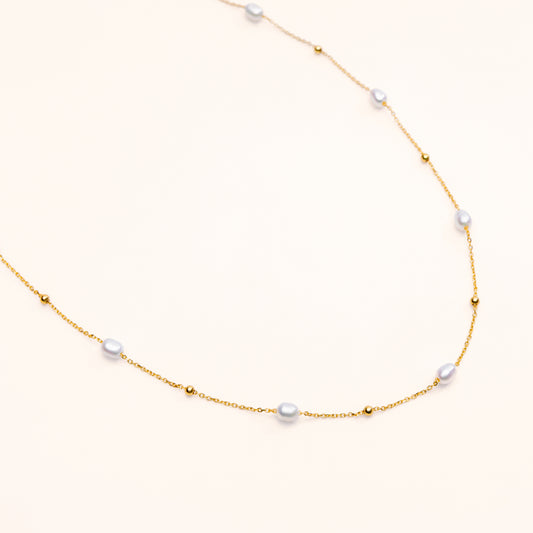
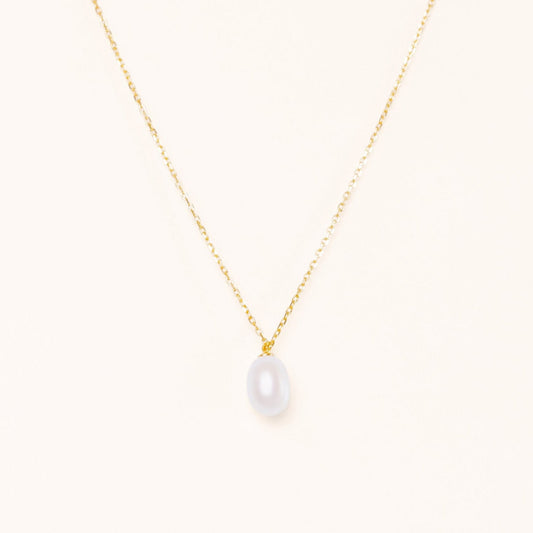
Layered necklaces tangle less when each chain differs in length, weight, and style. Two identical fine chains will twist around each other within an hour; a short station chain over a longer pendant, like the pairing above, tends to stay put. A few rules that work:
- Space lengths at least two inches apart. A 16-inch chain with an 18-inch pendant gives each layer its own lane. Our layering spacing formula covers the full set of combinations.
- Mix chain weights. Pair a fine cable chain with something slightly heavier, or let a pendant act as an anchor. Weight at the bottom keeps the longest layer hanging straight.
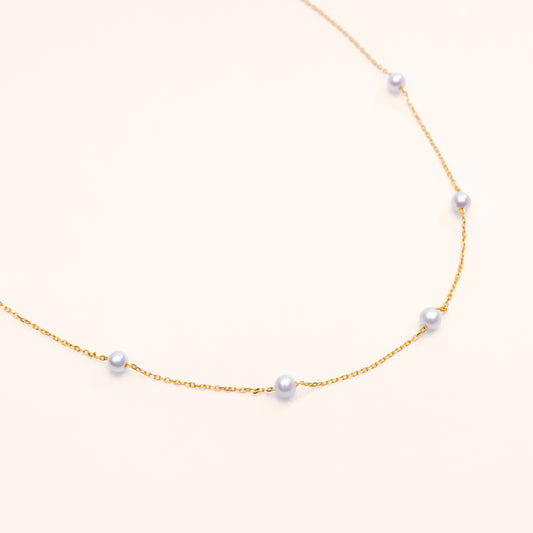
- Vary the chain style. Cable, box, and pearl-station chains move differently against each other, which reduces knotting.
- Use a layering clasp. A multi-strand detangler clasp holds several necklaces at fixed points at the back of the neck so they cannot twist.
- Fasten and adjust once after dressing. Knits and scarves drag chains; a quick check in the mirror after putting on a sweater saves a knot later.
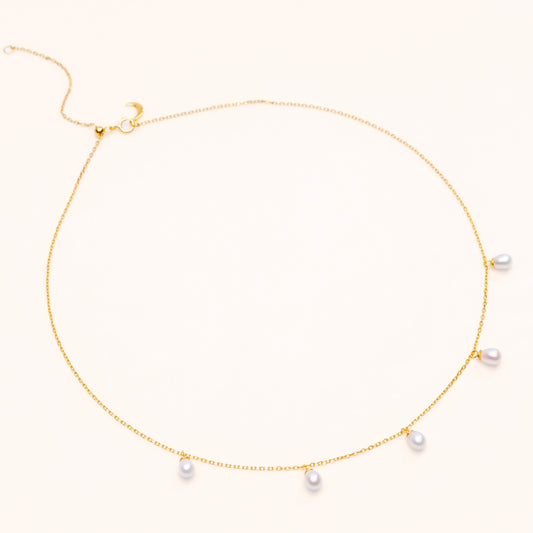
Browse our pearl necklaces for station, pendant, and drop styles that layer cleanly together.
How to Store and Pack Necklaces So They Never Knot
The best way to prevent tangles is to store every necklace fastened and separate. Most knots happen in drawers, pouches, and travel bags where loose chains rub together.
- Clasp before you put it away. A closed chain cannot thread itself through another.
- Give each necklace its own compartment or pouch, or hang it on a hook. Pearls are best stored flat in a soft pouch rather than hanging for long periods.
- Travel trick: thread one end of a fine chain through a drinking straw and fasten the clasp outside it, or lay the chain flat on a folded tissue and roll it loosely.
- Keep pearls away from hard gemstones and metal in storage so the nacre doesn't scratch.
For more detail, read how to store jewelry so it doesn't tangle, tarnish, or scratch. Every Pearl Luna necklace is made in 925 sterling silver with 18k gold plating, never brass, so a well-kept chain stays bright for years. Our family has worked with pearls in Kobe, Japan, for 70 years, and nearly every knot we see is a storage problem, not a chain problem.
Frequently asked questions
What is the fastest way to untangle a necklace?
Open the clasp, lay the chain flat on a light-colored cloth, and push two fine pins into the center of the knot. Gently draw the pins apart to loosen it, then ease the free end back through the loops. Avoid pulling the ends, which tightens the knot. Most fine-chain tangles come free in a few minutes.
Can you use oil to untangle a necklace?
Yes, on plain metal chains. A drop of baby oil or olive oil reduces friction between links so a stubborn knot loosens more easily. Afterward, wash the chain in lukewarm water with mild soap and dry it fully. Never use oil on pearls or near them, because pearl nacre is porous and sensitive to oils.
How do you untangle a pearl necklace without damaging it?
Use only dry tools, such as two fine pins, and keep oil, powder, and water off the pearls. Hold any pearl near the knot still between your fingers so the chain moves instead of the pearl. Work slowly from the center of the knot outward. If the chain is kinked or a link is crushed, take it to a jeweler.
Why do my layered necklaces keep tangling?
Layered necklaces tangle when chains are too close in length, too similar in weight, or the same style, so they twist around each other as you move. Space lengths at least two inches apart, add a pendant to weigh down the longest layer, mix chain styles, or use a multi-strand layering clasp to hold each necklace in place.
How should I store necklaces to prevent tangling?
Fasten each necklace before storing it, and give it its own compartment, pouch, or hook so chains never touch. Store pearl necklaces flat in a soft pouch, away from harder gemstones and metal pieces. When traveling, thread fine chains through a drinking straw or roll them loosely in tissue so they cannot knot in transit.